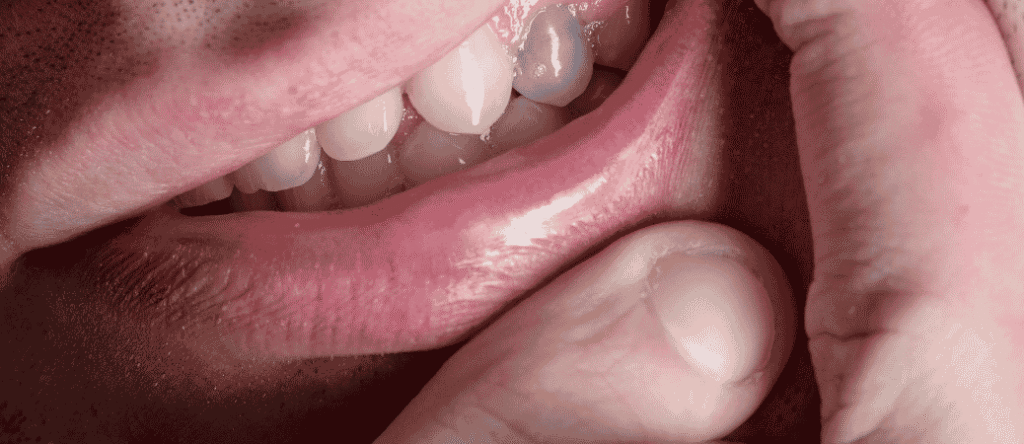
You notice one tooth darker than others in the bathroom mirror or in a photo: a front tooth looks noticeably darker than the one beside it. Your brain jumps straight to whitening strips.
Before you buy a box, it helps to know that color alone can’t tell you what’s going on inside that tooth.
A single dark tooth usually points to something happening beneath the enamel, not on top of it. It could be an old injury you barely remember, a filling that’s failed quietly, or a nerve that’s no longer alive.
Whitening products may not adequately lighten discoloration caused by an old injury, changes inside the tooth, or an existing restoration. That is why one dark tooth may remain noticeable after whitening.
The good news is that most causes of a single dark tooth are identifiable with a straightforward dental exam, and most have a real fix once the cause is known.
Key Takeaways
- A tooth that’s darker than its neighbors usually signals a change inside the tooth, not just a surface stain, and only an exam can tell you which.
- Over-the-counter whitening may not resolve discoloration caused by a damaged nerve, decay, or an old restoration.
- Depending on the cause, treatment can range from a simple cleaning to root canal therapy with internal bleaching, bonding, a veneer, or a crown.
What Makes a Single Front Tooth Turn Dark?
A front tooth darkens on its own when something changes inside the tooth structure, most often involving the nerve, decay, or an aging restoration.
Front teeth show this kind of change sooner than back teeth because their enamel is thinner, so internal shifts in color show through more easily.
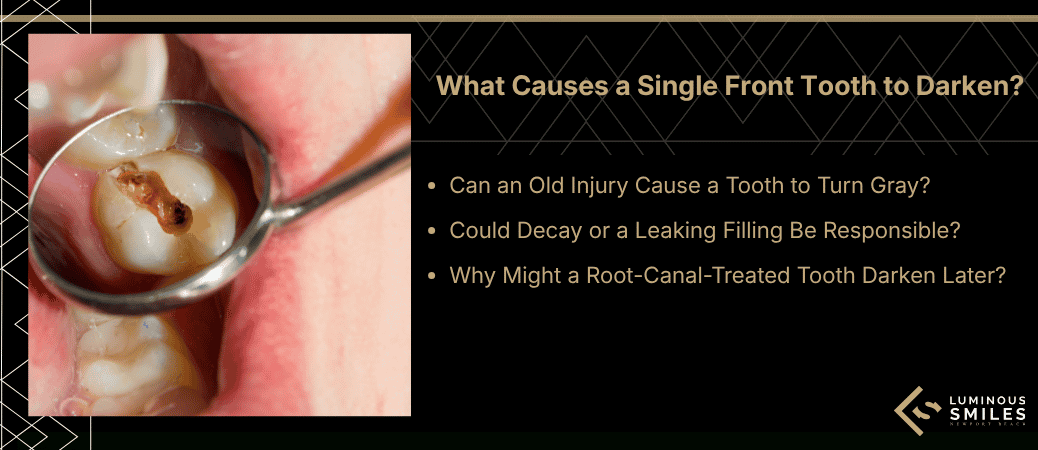
Can an Old Injury Cause a Tooth to Turn Gray?
Yes, and it doesn’t have to be a recent hit. A blow to the mouth, even one that happened years earlier and never cracked the tooth, can damage the blood vessels inside it.
Blood pigments then work their way into the dentin, the layer just under the enamel, giving the tooth a gray or brownish cast that develops slowly over time.
Plenty of people are surprised to trace their dark tooth back to a bike spill or a sports collision from childhood. The color change can take months or even years to show up after the original injury.
Could Decay or a Leaking Filling Be Responsible?
Deep decay can darken a tooth from within as bacteria break down the internal structure, and a leaking filling can do something similar around its edges.
When a filling’s seal fails, discoloration and sometimes new decay can develop underneath or around it, making the tooth look darker than its neighbors even though nothing looks obviously wrong on the surface.
Not every dark spot is decay, though. Some harmless surface stains can look brown or black too, which is one more reason color by itself isn’t a diagnosis.
Why Might a Root-Canal-Treated Tooth Darken Later?
A tooth that had root canal treatment years ago can gradually darken as the tooth ages or as residual tissue inside the chamber breaks down.
This is common enough that dentists have a specific name for the fix: internal bleaching, which targets discoloration from inside a tooth that’s already had its nerve removed.
Why Might Whitening Leave That Tooth Dark?
Whitening may leave one tooth darker because external bleaching may not adequately lighten discoloration caused by trauma or changes inside the tooth. Fillings and crowns also do not whiten like natural teeth.
How Do Surface Stains Differ from Discoloration Inside a Tooth?
Internal discoloration starts within the tooth and may follow an old injury or past dental work. Some stains in living teeth may respond to external whitening, but results vary.
Discoloration in a nonvital tooth may require a different approach.
The American Dental Association’s guidance on whitening is direct that these products don’t correct every type of discoloration and work best after an oral-health evaluation, not before one.
That sequencing matters more than people expect.
Can Whitening the Other Teeth Make the Difference More Noticeable?
Yes, and this catches a lot of people off guard. When you whiten every tooth except the dark one, the rest of your smile gets lighter while the problem tooth stays exactly where it was, which widens the gap in shade rather than closing it.
Professional teeth whitening can brighten natural teeth, but one dark tooth may need a separate evaluation and treatment to achieve a closer shade match.
How Will a Dentist Find the Cause?
A dentist finds the cause of a dark tooth by combining a visual exam, nerve testing, and X-rays, since none of those findings can be predicted from color alone.
This is the step that separates a tooth needing nothing more than a cleaning from one that needs a root canal.
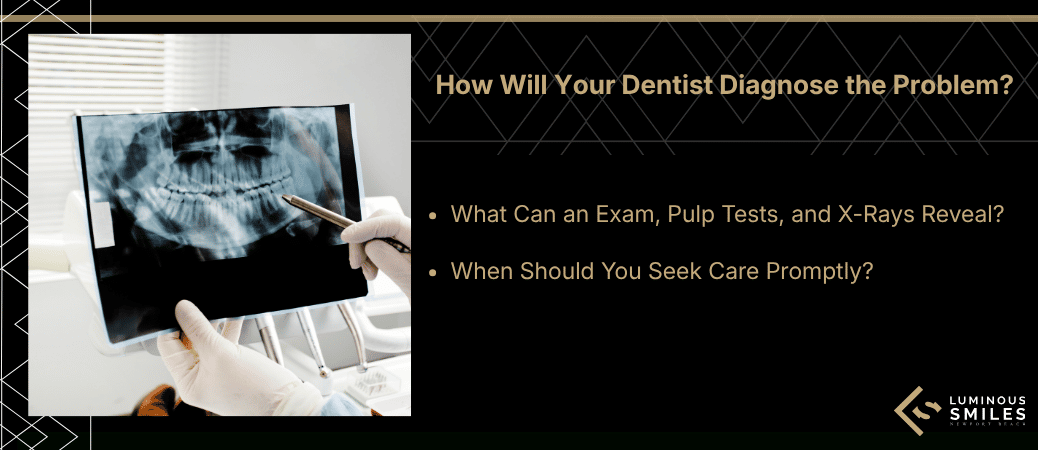
What Can an Exam, Pulp Tests, and X-Rays Reveal?
A close visual exam under consistent lighting compares the dark tooth to its neighbors and checks the enamel, any old restorations, and the surrounding gum tissue.
Pulp vitality tests, which check how the tooth responds to cold or mild stimulation, tell your dentist whether the nerve inside is still alive.
X-rays reveal what’s happening below the surface, including decay hidden under a filling, a failing root canal, or bone changes near the root tip that suggest infection.
Your dentist will also want to know when you first noticed the change and whether you remember any injury to that tooth, since that history often points straight to the cause.
When Should You Seek Care Promptly?
Get seen quickly if the tooth darkened suddenly, or if you notice pain, swelling, a bad taste, or looseness around it.
Even without pain, a tooth that changes color out of nowhere deserves a dental visit within a couple of weeks rather than a wait-and-see approach.
A tooth can die slowly and painlessly, so comfort isn’t a reliable sign that everything is fine. If left unaddressed, a nonvital tooth can eventually lead to infection, which is a bigger problem than the color ever was.
What Can Restore the Tooth’s Health and Color?
Treatment for a dark tooth ranges from a simple professional cleaning to root canal therapy followed by internal bleaching, bonding, a veneer, or a crown, depending entirely on what’s causing the discoloration.
Matching a healthy, vital tooth back to its neighbors looks very different from restoring a tooth that’s already lost its nerve.
When Are Cleaning or Targeted Whitening Enough?
If the discoloration is a surface stain on a tooth with a healthy, living nerve, a professional cleaning or professional whitening is often enough to close the gap.
This is the simplest scenario, and it’s worth ruling out first before assuming anything more serious is going on.
Vital teeth with mild internal staining sometimes respond to whitening too, though results vary and a perfect match isn’t guaranteed.
When Is Root Canal Therapy Needed Before Cosmetic Treatment?
Root canal treatment comes first whenever the pulp is infected, dying, or already dead, because covering up discoloration doesn’t resolve an underlying infection.
Once the canal is cleaned, sealed, and confirmed stable, your dentist can plan cosmetic treatment around a tooth that’s no longer at risk of causing pain or swelling later.
Who May Be a Candidate for Internal Bleaching?
Internal bleaching is an option for teeth that have already had, or are about to have, root canal treatment and have darkened afterward.
During the procedure, sometimes called the walking bleach technique, a dentist may place a whitening agent, seal it temporarily, and check the shade over one or more visits until it matches your other teeth.
It’s a conservative choice compared with covering the tooth, since it doesn’t require removing healthy enamel. The color can occasionally relapse over the years, so a touch-up down the line isn’t unusual.
When Do Bonding, a Veneer, or a Crown Make More Sense?
Bonding, a porcelain veneer, or a dental crown make sense when whitening or internal bleaching can’t fully resolve the color, or when the tooth needs structural support.
Composite bonding uses tooth-colored resin applied directly to the tooth and works well for smaller color or shape corrections.
A veneer covers the whole front surface with a thin, custom-shaded shell, which is often the choice when discoloration is deep or persistent.
A crown becomes the right call when the tooth has lost significant structure from decay or a large old filling, since it restores both strength and appearance.
Choosing the right tooth restoration usually comes down to how much healthy tooth remains and what caused the original problem.
| Option | Best For | Removes Tooth Structure? |
| Professional whitening | Vital tooth with mild surface stain | No |
| Internal bleaching | Root-canal-treated, non-vital tooth | No (works inside existing chamber) |
| Composite bonding | Mild to moderate color or shape change | Minimal |
| Porcelain veneer | Persistent discoloration, healthy structure | Some enamel prep |
| Dental crown | Discoloration with structural damage | Most |
Treat the Cause Before Matching the Shade

A single dark tooth is a signal worth listening to, not a cosmetic inconvenience to cover up on your own.
Whitening strips and gels can brighten enamel, but they were never built to explain why one tooth changed while its neighbors didn’t.
Getting an exam first means you treat the underlying issue, whether a stain, cavity, or damaged nerve, before evening out the color.
This cause-first approach ensures the eventual shade match holds up over time. A skilled dentist can then help you choose the right cosmetic fix.
Frequently Asked Questions
Why is my one front tooth darker even though it does not hurt?
A tooth’s nerve can die slowly and painlessly, so comfort doesn’t rule out internal changes. Old trauma, early decay, or a failing filling can all darken a tooth gradually without ever causing pain.
An exam with X-rays is the only reliable way to find out what’s happening.
Can whitening strips make one dark front tooth white again?
Whitening strips may lighten some stains on natural teeth, but they may not correct a tooth that darkened after an injury or changes inside the tooth.
Does a gray front tooth always need a root canal?
No, a gray tooth doesn’t automatically mean the nerve is dead or that a root canal is required. Color alone can’t confirm what’s happening inside the tooth; pulp testing and X-rays are needed to check.
Some gray teeth turn out to have healthy nerves and simply need monitoring or a conservative cosmetic fix.
How do you fix uneven whitening around one dark tooth?
Whitening the rest of your smile without addressing the dark tooth separately usually makes the mismatch more obvious, not less.
The fix depends on the cause: internal bleaching for a root-canal-treated tooth, or bonding, a veneer, or a crown for other cases. An exam determines which approach will actually blend that tooth back in.
Can a dentist match one discolored front tooth to the rest?
In most cases, yes, once the underlying cause is identified and treated. Options include internal bleaching, composite bonding, a porcelain veneer, or a crown based on the remaining tooth structure.