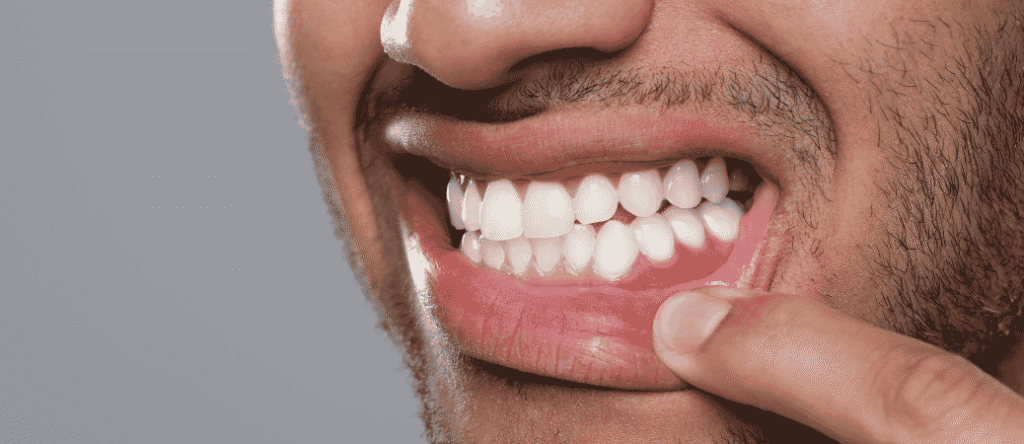
Yes, you can often get veneers with receding gums, as long as the recession is mild, has stopped getting worse, and your gums are free of active disease.
If your gums are healthy and stable, veneers are usually a safe option; if you have active gum disease or recession that is still progressing, you need gum treatment first.
Many people worry that a changing gum line means they missed their window for a better smile. In most cases, you have not. You may just need a few steps in the right order.
One point helps set expectations early. Standard veneers cover the front of the visible tooth, and they do not treat receding gums or regrow lost tissue. Gum health comes first, and cosmetic work comes after.
Key Takeaways
- Mild, stable recession with healthy gums can allow veneer placement.
- A dentist checks gum inflammation, bone support, and the cause of recession before planning veneers.
- Gum treatment, grafting, or bite protection may come first, followed by veneers, bonding, or gum veneers.
Table of Content
- When Are Veneers an Option?
- What Does a Dentist Check Before Recommending Veneers?
- What Treatment Might Be Needed First?
- Which Cosmetic Option Fits After the Gums Are Stable?
- Choose Stable Gums Before a New Smile
- Frequently Asked Questions
When Are Veneers an Option?
Veneers become an option once your gums are calm, healthy, and holding steady at the same level. The two deciding factors are how much recession you have and whether it is still moving.
A small, settled change behaves very differently from active gum disease.
When Mild, Stable Recession May Allow Veneer Placement
If your gum line pulled back a little years ago and has stayed put since, you are in a good position.
Your dentist can design each veneer so its edge sits level with the healthy gum and blends in with your natural tooth.
Signs you may be a good fit for veneer placement:
- Your gums do not bleed when you brush or floss.
- Measurements stay the same across several visits.
- Only a small amount of extra tooth shows near the gum line.
- Your teeth feel firm with no looseness.
A careful assessment helps determine whether veneers are suitable for your teeth and gums.
If you want a fuller picture of how the process works, exploring dental veneers for your smile walks through the basics.
When Active Gum Disease or Ongoing Recession Means Waiting
Active gum disease means you need to pause your veneer treatment until the gums heal. Inflamed gums bleed during scans and bonding, and they keep shifting. That shifting can expose the veneer edge as a dark line later.
Periodontal disease is common and can be silent. CDC data from 2009–2014 indicate that about four in ten U.S. adults aged 30 or older had periodontitis. Gum disease may develop without obvious pain.
Waiting is a smart move here. Once the disease is treated and your gums stay healthy for several months, you can revisit veneers with much better odds of a lasting result.
If you want help with that first step, read about how to get the right gum disease treatment.
What Does a Dentist Check Before Recommending Veneers?
A dental professional checks three things: how healthy your gums are, how much root and bone support you have, and what caused the recession.
Each answer shapes whether you move forward now, treat something first, or choose a different option.
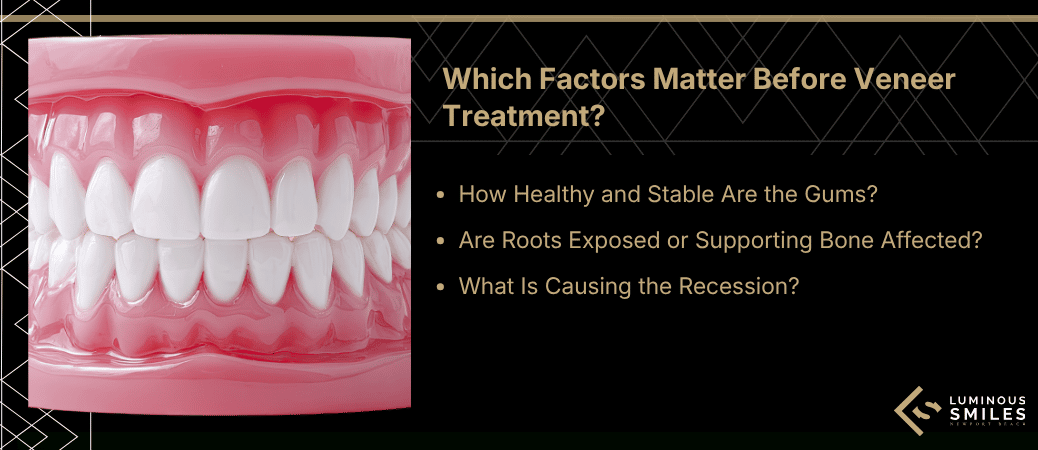
How Healthy and Stable Are the Gums?
Your dentist starts by looking for gum inflammation. Red, puffy, or bleeding gums are a sign that bacteria and tartar are irritating the tissue.
Next comes gentle probing. A thin measuring tool checks the small pocket between each tooth and the gum. Deeper pockets point to gum disease.
Stability is the other half. Your dentist records your gum line and compares it over time. Dr. Dimple Desai can assess your gum health and explain how recession may affect your cosmetic treatment options.
Are Roots Exposed or Supporting Bone Affected?
When gums recede, they can leave exposed tooth roots. Exposed roots lack the enamel covering found on the tooth’s crown, which can make teeth more sensitive, especially to cold drinks.
Veneers bond best to enamel. A veneer placed over a large area of root will not hold as well and can look uneven.
This is why your dentist may suggest covering the root with gum tissue before any cosmetic work.
X-rays show bone loss that you cannot see in the mirror. Healthy bone keeps your teeth firm. If bone support is thin, your dentist will focus on protecting the tooth before adding a veneer.
What Is Causing the Recession?
Recession nearly always has a cause, and finding it keeps the problem from coming back after your new smile is in place.
| Common cause | What your dentist looks for | Typical fix |
| Gum disease | Bleeding, deep pockets, tartar | Deep cleaning and follow-up care |
| Hard brushing | Worn notches near the gum line | Soft brush and lighter pressure |
| Bruxism (teeth grinding) | Flat, worn edges and sore jaw | Custom night guard |
| Tooth position | Teeth sitting outside the bone | Orthodontic treatment |
| Thin gum tissue | Delicate, see-through gums | Gum graft in some cases |
Grinding deserves extra attention. The force from nightly teeth grinding can crack porcelain, so your dentist will want it managed before placing veneers.
What Treatment Might Be Needed First?
Most people who need prep work start with a deep cleaning and better daily habits. A smaller group needs a gum graft, a night guard, or tooth straightening before veneers make sense.
Treating Gum Disease and Improving Daily Care
A deep cleaning (also called scaling and root planing) removes tartar and bacteria from below the gum line. It also smooths the root so germs have a harder time sticking.
After that, your oral hygiene at home does most of the work. A few changes help right away:
- Use a soft-bristled brush with light, small circles.
- Clean between your teeth once a day with floss or a water flosser.
- Try an electric brush with a pressure sensor if you tend to scrub.
- Keep regular cleanings so your hygienist can spot early changes.
Healing takes patience. Your dentist will decide when your gums are stable enough for veneers based on the treatment you received and your follow-up examinations.
For daily habits that protect your oral health, see how to prevent gum disease before it starts.
When a Gum Graft or Bite Treatment May Help
A gum graft adds tissue over exposed roots. The most common type uses a small piece of tissue from the roof of your mouth.
Gum grafting makes sense when recession has exposed enough root that a veneer would look odd or bond poorly. Your dentist lets the graft fully settle before shaping veneers around the new gum line.
Bite problems need their own plan. A hard night guard protects against grinding. If crowded or tilted teeth are pushing on thin gums, orthodontic treatment can move them into a healthier spot first.
Some patients pair aligners with cosmetic work, as described in SureSmile and veneers.
Which Cosmetic Option Fits After the Gums Are Stable?
Once your gums are healthy, you can choose among porcelain veneers, composite veneers, bonding, and gum veneers. The right pick depends on how much recession remains and how long you want the result to last.
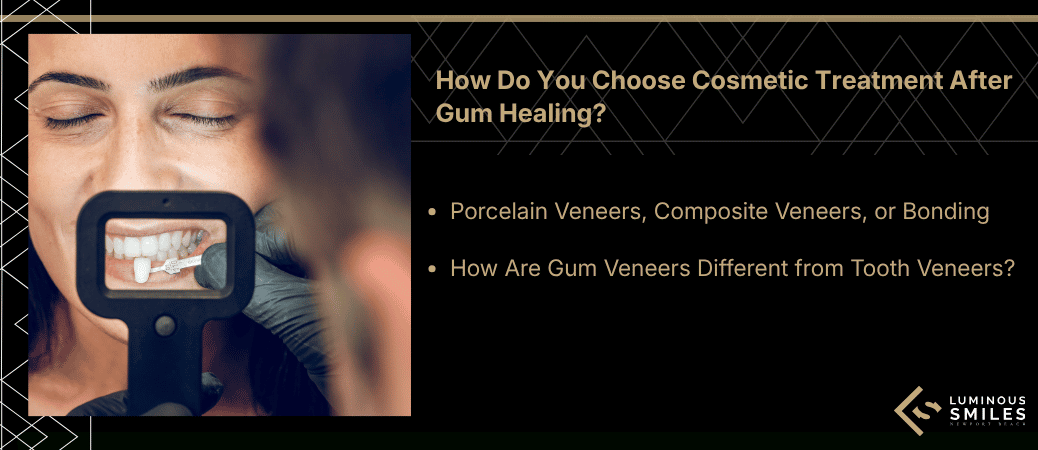
Porcelain Veneers, Composite Veneers, or Bonding
Porcelain veneers resist stains and hold their shape for many years. They work best when you have healthy enamel and only mild recession.
If you are weighing this choice, our guide ‘are porcelain veneers right for you’ covers who they suit.
Composite veneers and composite bonding use tooth-colored resin. They take less tooth preparation and are easy to repair or adjust if your gum line shifts a little later.
That flexibility appeals to many people with a history of recession.
| Option | Durability | Tooth prep | Easy to adjust | Best fit |
| Porcelain veneers | Long-lasting | Some enamel removed | No | Stable gums, strong enamel |
| Composite veneers | Moderate | Little to none | Yes | Mild recession, budget focus |
| Composite bonding | 3 to 5 years | Little to none | Yes | Small fixes, root edges |
Smile design ties it together. Your dentist plans tooth length and shape around your current gum line so the result looks balanced. Learn more about how gum health and smile design work together in cosmetic dentistry.
How Are Gum Veneers Different from Tooth Veneers?
Gum veneers, also called gingival veneers, replace the look of missing gum tissue. Tooth veneers change the look of the teeth themselves.
People sometimes search for “veneers for receding gums” and mean one or the other, so it helps to know the difference.
Most gum veneers are removable veneers made of acrylic, composite, or porcelain. You take them out at night and clean them like a denture.
The idea goes back a long way, since gingival veneers were first introduced in 1955 to mask lost gum tissue.
They suit people with severe recession who want to avoid surgery or who would not get enough coverage from grafting.
Choose Stable Gums Before a New Smile
Healthy, stable gums are what make veneer treatment last. If your recession is mild and holding still, you may be ready now.
If your gums bleed or keep pulling back, treatment first gives you a better long-term result.
Your path usually looks like this:
- Get a gum exam with probing and X-rays.
- Treat any gum disease and fix the cause, such as hard brushing or grinding.
- Add a graft or night guard if needed, then let things heal.
- Choose porcelain, composite, bonding, or gum veneers based on your gum line.
Protecting your gum health now keeps your new smile looking natural for years.
When you are ready, the team at Luminous Smiles can check your gums, explain what they see, and plan veneers or another option that fits your smile.
Frequently Asked Questions
Can you get veneers if you have gum disease?
You cannot get veneers while gum disease is active. Once a deep cleaning and good home care bring your gums back to health, and they stay that way for a few months, veneers become a realistic option again.
Do veneers fix receding gums or cover exposed roots?
Veneers do not fix receding gums. They cover the front of the visible tooth and bond poorly to root surfaces, so a gum graft or gum veneer is the better way to address exposed roots.
What disqualifies you from getting veneers?
Active gum disease, loose teeth, untreated decay, and recession that keeps getting worse are common reasons to wait.
Very thin enamel or untreated grinding can also rule out porcelain veneers until those issues are handled.
Do you need a gum graft before getting veneers?
Only some people need a graft first. It helps when recession exposes enough root that a veneer would look uneven or bond poorly, and your dentist will let the graft heal for a few months before placing veneers.
Are gum veneers the same as porcelain veneers?
No, they serve different jobs. Porcelain veneers change the look of your teeth, while gum veneers are usually removable pieces that recreate the look of missing gum tissue.