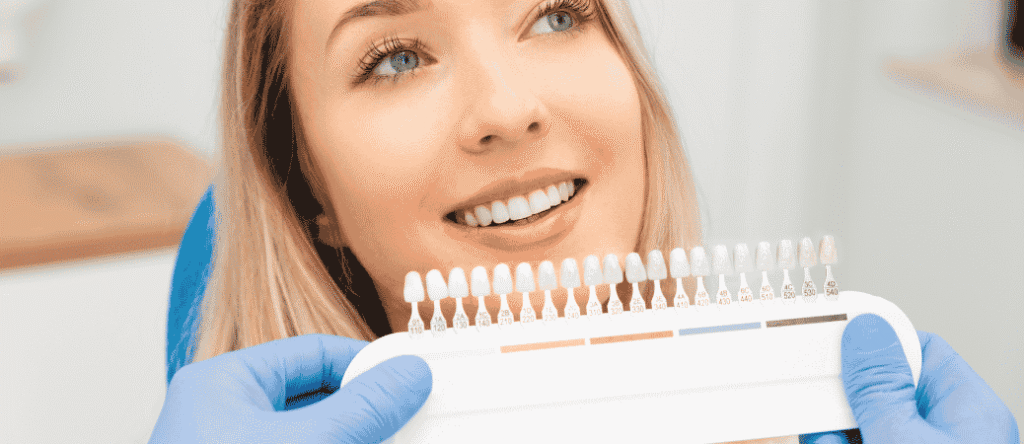
Can you whiten crowns and veneers? Whitening can brighten natural teeth, but it does not change the underlying shade of crowns, veneers, or fillings.
Knowing that before treatment can help you avoid an uneven smile.
If you already have visible dental work, the teeth around it may become lighter while the restoration keeps its original shade.
A crown that once blended in can then look darker by comparison, even though its color has not changed.
Sometimes the problem is surface buildup rather than a shade mismatch. Plaque, coffee, or other stains can make a restoration look dull, and cleaning or polishing may help.
A dentist can check which issue you have and help you plan whitening or other treatment accordingly.
Key Takeaways
- Whitening gel changes the color of natural enamel, not the color of crowns, veneers, or fillings.
- A restoration that looked fine before whitening can suddenly stand out once your natural teeth get lighter.
- The fix depends on the cause: cleaning for surface stains, whitening first for new work, or replacement when a real mismatch shows up.
What Can Whitening Actually Change?
Whitening gel only works on natural tooth enamel. It has no chemical effect on porcelain, ceramic, zirconia, or composite resin.
Can you whiten crowns and veneers? Whitening gel will not change their underlying shade, although it can lighten the natural teeth around them.
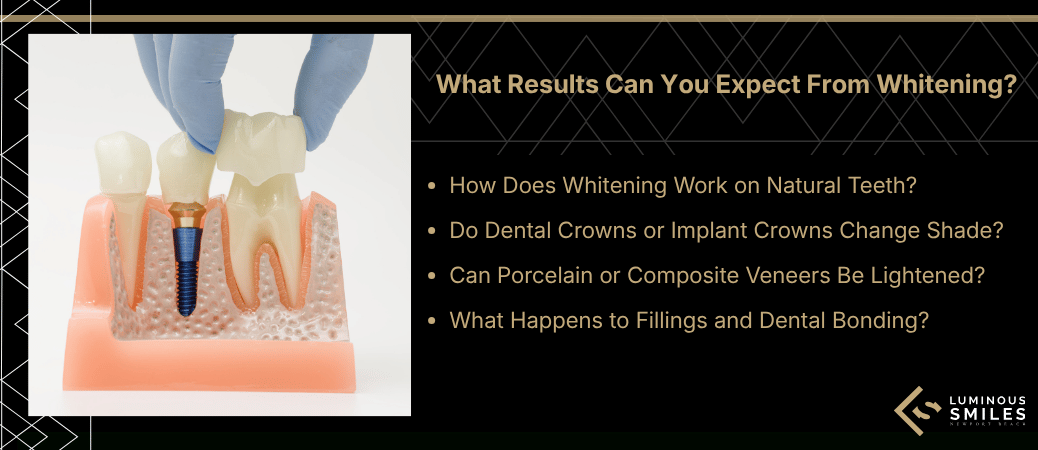
How Does Whitening Work on Natural Teeth?
Whitening agents like hydrogen peroxide and carbamide peroxide work by soaking into tiny pores in natural tooth enamel.
Once inside, they break down the stain molecules that build up over years of coffee, tea, or normal wear. That breakdown is what makes a tooth look lighter and brighter.
This only works because enamel is porous. The peroxide needs somewhere to go.
Do Dental Crowns or Implant Crowns Change Shade?
Dental crowns, including implant crowns, do not change shade with whitening.
They are made from porcelain, ceramic, or metal that is glazed and sealed during fabrication, so there is no porous surface for whitening gel to penetrate.
The shade a crown is made in is the shade it keeps, sometimes for many years.
Can Porcelain or Composite Veneers Be Lightened?
Porcelain and composite veneers cannot be lightened with bleaching products. Porcelain veneers are especially stain-resistant because their surface is smooth and non-porous.
Composite veneers behave a bit differently since the resin can pick up some surface staining over time, but the material’s base shade stays fixed once it is placed.
What Happens to Fillings and Dental Bonding?
Composite fillings and dental bonding hold the shade they were placed in and do not respond to peroxide.
Composite resin is somewhat porous compared to porcelain, so it can pick up surface stains near the edges over the years. That surface staining is different from the filling actually lightening.
Why Can Whitening Leave a Smile Looking Uneven?
A smile can look uneven after whitening because your natural teeth lighten while tooth-colored restorations stay exactly where they started.
The contrast is what creates a mismatched smile, not any damage to the restoration itself.
Why Does a Front Crown or Filling Suddenly Stand Out?
A front crown or filling stands out after whitening because it was matched to your teeth at their old, darker shade.
Once the teeth around it lighten by several shades, the restoration looks darker and duller by comparison, even though it has not changed at all.
This is especially noticeable on front teeth, where the eye naturally lands first.
Could Surface Stains Be Making a Restoration Look Darker?
Surface stains can absolutely make a restoration look darker than it really is. Coffee, tea, red wine, and tobacco can leave a film on composite fillings and along the margins where a crown or veneer meets a natural tooth.
A professional cleaning often clears this up without touching the underlying shade, which is worth ruling out before assuming you need a full replacement.
How Can You Improve a Restoration That Looks Too Dark?
A restoration that looks too dark can often be improved with cleaning, sometimes needs repair or replacement, and sometimes is fine to leave alone.
Which path makes sense depends on whether the problem is surface buildup, a true shade mismatch, or a restoration that is still doing its job just fine.
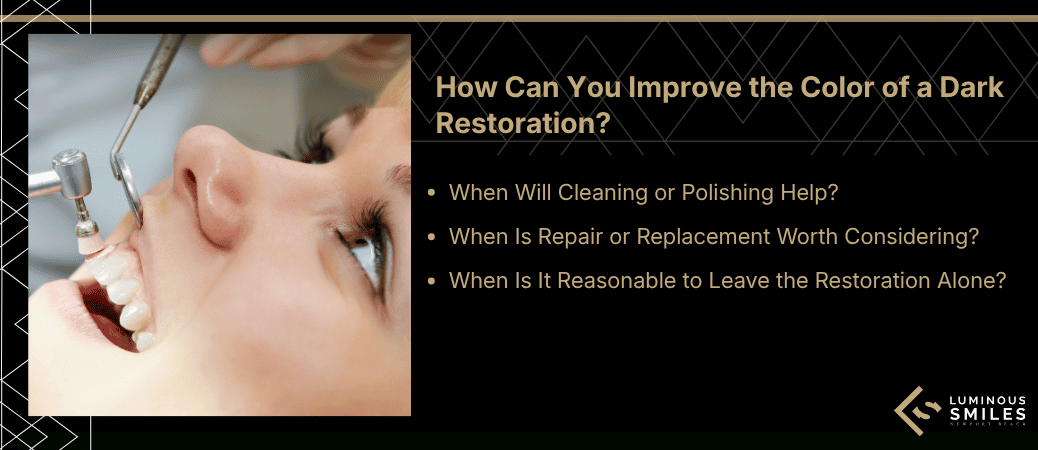
When Will Cleaning or Polishing Help?
Cleaning or polishing helps when the issue is surface stain rather than a true color mismatch.
A dental cleaning can lift plaque and film off porcelain veneers and dental crowns, and polishing can smooth out composite fillings that have picked up stains along the edges.
This will not change the restoration’s underlying shade, but it can bring back some shine and make a duller restoration look fresher.
When Is Repair or Replacement Worth Considering?
Repair or replacement is worth considering when the restoration’s actual shade no longer matches your whitened teeth.
Composite fillings may be simpler to replace, since a cosmetic dentist can simply place fresh resin in a shade that matches your brighter smile.
Porcelain crowns and veneers generally need to be remade in a lab to change color permanently, which is a bigger step but the most reliable way to fix a real mismatch.
When Is It Reasonable to Leave the Restoration Alone?
It is reasonable to leave a restoration alone when the mismatch is minor or the restoration sits somewhere that rarely shows when you smile. Back teeth restorations, in particular, often do not need any change at all.
A cosmetic dentist can help you decide whether a slight shade difference makes replacement worthwhile, especially if you are weighing the decision as part of broader dentistry smile planning.
When Should You Whiten If You Need New Dental Work?
Whiten before choosing the shade for any new crown, veneer, or filling.
Getting your natural teeth to the shade you want first means the new restoration can be built to match it, instead of locking in a shade your teeth may soon outgrow.
Why Whiten Natural Teeth Before Choosing a Restoration Shade?
Whitening natural teeth first gives your dentist a stable, final target to match new work against.
If a restoration is placed before whitening, and you whiten afterward, your natural teeth will likely end up lighter than the new crown or veneer, recreating the same mismatch problem you were trying to avoid.
Planning the order in advance is part of building a smile makeover that actually holds together over time.
How Long Should You Wait Before Shade Matching?
Your dentist may recommend waiting around two weeks after whitening before selecting the shade for a new restoration.
Teeth can look temporarily lighter right after whitening. Waiting gives the shade time to settle before your dentist selects a color for the new restoration.
Is Whitening Safe Around Existing Dental Work?
Whitening is often possible when you have crowns, veneers, or fillings, but a dentist should check your teeth and restorations before you start. Your natural teeth may lighten while the restorations keep their existing shade.
The bigger consideration is cosmetic rather than safety: making sure a dentist checks your restorations first so you know what to expect.

Do Whitening Strips or Professional Treatments Affect Restorations?
Whitening strips and professional treatments generally will not make restorations match newly whitened natural teeth. Ask a dentist to check the restorations and discuss the whitening method before treatment.
The outcome is cosmetic, not a safety concern, though a poor-fitting strip can sometimes miss coverage around a crown’s edge and lead to an uneven look right at the margin.
What Should a Dentist Check Before You Start?
A dentist should check which teeth have restorations, where those restorations sit in your smile, and whether they are likely to show a shade difference after whitening.
This kind of check helps set realistic expectations, especially if you have several front-tooth crowns or veneers already in place.
It is also a good moment to flag any plans for future dental work, so the timing can be built around it from the start.
Choosing a Shade Plan That Keeps Your Smile Consistent
A shade plan works best when it starts with your natural teeth and treats any restoration as something to match, not something to chase.
Deciding on your target shade before any new crown, veneer, or filling is placed gives your dentist a fixed point to build around, rather than guessing at a shade that might shift later.
At Luminous Smiles, Dr. Dimple Desai can review your current crowns or veneers, discuss the shade you want for your natural teeth, and help plan the order of whitening and any new dental work.
That conversation shapes whether you whiten now, wait, or coordinate whitening with an upcoming restoration. It may also help you avoid replacing a restoration sooner than expected because of a shade mismatch.
If you are still deciding whether whitening or a restoration like veneers fits your goals better, it helps to look at how the two options compare directly before you commit to either one, since some cosmetic goals are better solved with one approach than the other, as covered in this comparison to help you choose between veneers and tooth whitening.
Keeping natural teeth as the reference point, rather than an existing restoration, tends to produce the most consistent result over the years.
Frequently Asked Questions
Can you whiten crowns without whitening the surrounding teeth?
No, crowns do not respond to whitening gel at all, so there is nothing to selectively whiten.
Whitening treatments only affect natural tooth enamel, which means any brightening you see will come from the teeth around the crown, not the crown itself.
Can you whiten veneers that have become stained?
You cannot bleach a veneer lighter, but surface stains on veneers can often be professionally cleaned or polished.
This is especially true for porcelain veneers, which resist staining well but can develop buildup at the margins over time.
Will whitening make a tooth-colored filling more noticeable?
Whitening can make a tooth-colored filling more noticeable if it sits on a front tooth and your natural enamel lightens around it.
The filling itself does not get darker; it simply stands out more once the surrounding tooth structure brightens.
Do whitening strips work on crowns and veneers?
Whitening strips do not change the shade of crowns or veneers, since the peroxide in the strips has no effect on porcelain or composite material.
They will still lighten any natural enamel they touch, which can create the same shade contrast seen with professional whitening.
Do I have to replace a crown after whitening my teeth?
Not always. Replacement only makes sense if the shade difference between your crown and your natural teeth actually bothers you, especially on a front tooth.
Many people whiten and simply decide the mismatch is minor enough to leave alone, particularly on back teeth that rarely show.