
Getting veneers with teeth grinding may be possible after a careful assessment. Your dentist will check your bite, remaining enamel, and grinding history before recommending treatment, because bruxism can increase the risk of chips, fractures, or loosening.
If you grind your teeth, veneers can still work for you, but only after your dentist checks how severe the grinding is, how much enamel remains, and whether you’re willing to wear a protective night guard consistently.
Skipping that step is where most veneer problems start.
This matters because veneers are a real investment, both financially and in terms of your natural tooth structure.
A dentist who takes bruxism seriously will want to look at your bite, your jaw, and your wear patterns before ever picking up a shade guide. That conversation protects your smile and your wallet.
Key Takeaways
- Grinding doesn’t disqualify you from veneers, but untreated or severe bruxism raises the risk of chips, fractures, and debonding.
- Your dentist will check enamel levels, bite contacts, and jaw symptoms before recommending veneers, and may ask you to commit to a custom night guard.
- If grinding is severe or enamel is too worn, crowns, bonding, or orthodontic treatment may protect your smile better than veneers.
Table of Content
- What Determines Whether Veneers Are Suitable?
- How Can Teeth Grinding Damage Veneers?
- What Will a Dentist Check Before Recommending Veneers?
- How Can You Protect Veneers If You Grind?
- What Are the Alternatives If Veneers Are Too Risky?
- Choosing a Smile Treatment You Can Protect
- Frequently Asked Questions
What Determines Whether Veneers Are Suitable?
Veneer suitability comes down to how much natural tooth structure you have left, how active your grinding is, and whether your bite puts uneven pressure on your front teeth.
Veneers with bruxism are not automatically off the table, but your dentist needs a clear picture of your oral health before moving forward.
Worn teeth, cracked teeth, or teeth with thin enamel change the equation. Veneers bond best to enamel, so if grinding has already worn that layer thin, the bond may not hold as well over time.
When Might Mild Grinding Be Manageable?
Mild, well-controlled grinding is often compatible with veneers, especially when you’re committed to wearing a night guard.
If your wear patterns are minor and stable rather than getting worse, your dentist may feel comfortable moving forward with added protective planning.
When Should Veneers Be Delayed or Ruled Out?
Veneers should wait if you have active decay, gum disease, or significant tooth wear that hasn’t been evaluated yet.
Severe, uncontrolled grinding with ongoing enamel loss or jaw pain usually needs to be addressed first, since placing veneers on top of an unstable bite tends to set them up for early failure.
How Can Teeth Grinding Damage Veneers?
Bruxism generates forces that porcelain veneers aren’t built to absorb indefinitely, and that mismatch is the main reason dental veneers fail early in people who grind.
The pressure isn’t like normal chewing. It’s repetitive, often happens overnight without you realizing it, and concentrates right at the edges of your veneers.
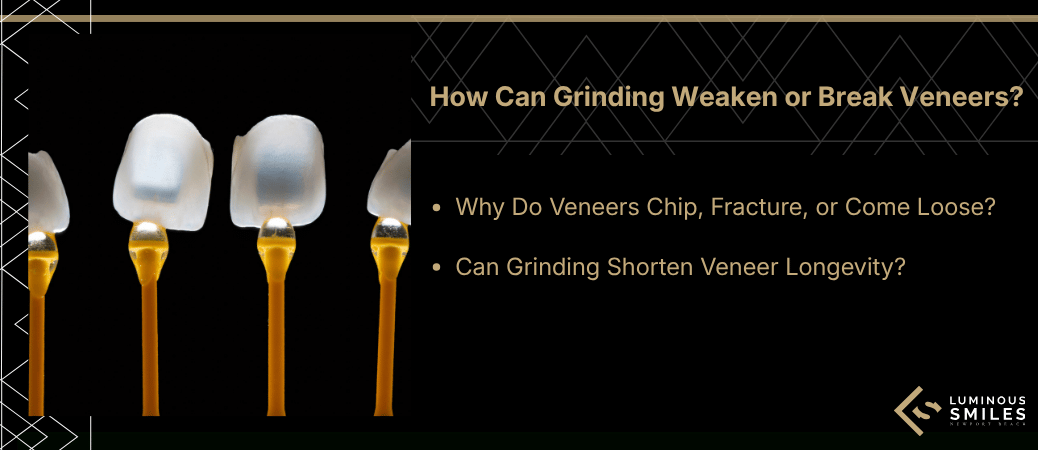
Why Do Veneers Chip, Fracture, or Come Loose?
Veneers chip and fracture because porcelain is strong under straight-on pressure but brittle against the side-to-side, shearing motion of grinding.
The thinnest part of a veneer, the biting edge, takes the brunt of that sideways force.
Debonding happens when that same shear stress gradually weakens the adhesive bond, sometimes without obvious warning until the veneer feels loose.
Can Grinding Shorten Veneer Longevity?
Grinding can shorten how long your veneers last, though the extent depends on how consistently you protect them.
Dental restorations placed without any plan for managing bruxism tend to show wear, chipping, or marginal breakdown much sooner than those protected by a properly fitted guard.
Veneer longevity isn’t just about the ceramic chosen. It’s about whether the forces acting on it are controlled.
What Will a Dentist Check Before Recommending Veneers?
A cosmetic dentist will look well beyond your smile before signing off on veneers, starting with a full bite assessment.
This isn’t a quick glance. It typically includes checking how your teeth meet when you bite down, how they slide against each other, and whether your jaw shows signs of strain.
How Do Tooth Wear and Remaining Enamel Affect the Decision?
Tooth wear and enamel levels directly affect whether veneers can bond securely and last.
Your dentist will map out where enamel is intact versus where grinding has thinned it, because veneers bonded to dentin instead of enamel don’t hold up nearly as well.
This is one of the clearest, most objective parts of the exam, since worn or cracked teeth are often visible on close inspection or x-rays.
Why Do Bite Contacts and Jaw Symptoms Matter?
Bite contacts and jaw symptoms matter because they reveal how your teeth interact under function, not just at rest.
A bite analysis shows your dentist exactly where pressure concentrates when you chew, clench, or move your jaw side to side.
Bite problems like malocclusion or misaligned teeth can direct extra force onto specific teeth, and jaw pain or jaw discomfort may point to deeper issues like TMJ strain that should be addressed before smile design even begins.
Tooth sensitivity is also worth mentioning to your dentist, since it can be an early sign of enamel wear from grinding.
How Can You Protect Veneers If You Grind?
Protecting veneers starts with a custom night guard, but it also means paying attention to what’s driving your grinding in the first place.
A properly fitted night guard separates the teeth and may help limit damage from grinding. It does not eliminate grinding or guarantee that veneers will remain undamaged.
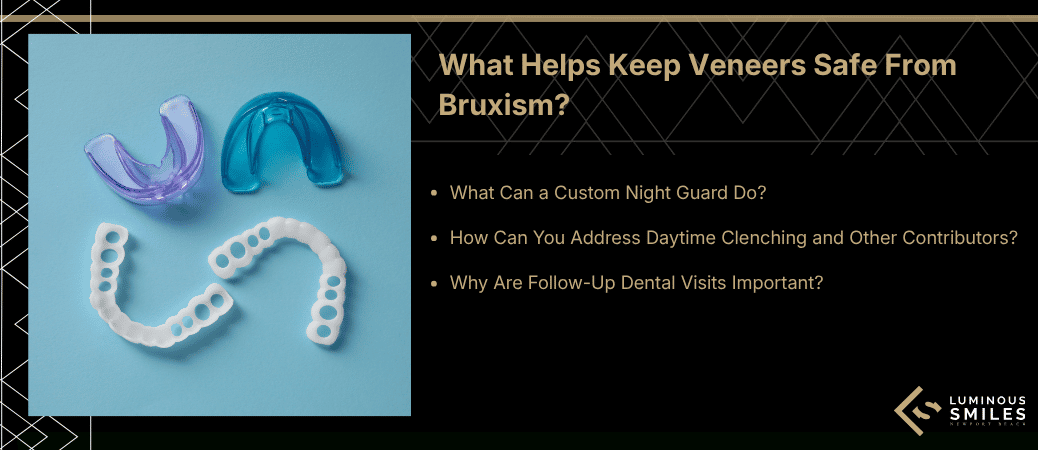
What Can a Custom Night Guard Do?
A custom night guard provides a protective barrier between your upper and lower teeth and is fitted to your bite.
Unlike store-bought mouthguards, a custom occlusal splint is molded to your exact bite, which helps it stay in place and distribute pressure evenly.
It won’t stop you from grinding, but it changes what gets worn down when you do.
How Can You Address Daytime Clenching and Other Contributors?
Daytime clenching often responds to simple awareness and stress management, since many people clench without noticing until a dentist or partner points it out.
Awake bruxism tends to be tied to concentration or stress, while sleep bruxism is harder to consciously control.
Sleep apnea is also worth ruling out if you grind heavily at night and wake up tired, since the National Institute of Dental and Craniofacial Research notes that bruxism can be connected to other sleep-related conditions that may need separate evaluation.
Why Are Follow-Up Dental Visits Important?
Follow-up visits let your dentist catch small problems before they become expensive ones.
Regular dental check-ups allow for early detection of chips, loosening, or shifts in your bite, and give your dentist a chance to check the condition of your night guard itself.
Protecting your dental health after veneers are placed isn’t a one-time conversation. For more on keeping a new smile intact long term, see preserving your dental veneers investment.
What Are the Alternatives If Veneers Are Too Risky?
Dental crowns, composite bonding, and orthodontic treatment are the main alternatives when veneers carry too much risk for your bite.
Each addresses a different concern, so the right substitute depends on whether your main issue is appearance, structural damage, or alignment.
| Option | Best For | Tooth Reduction | Repairability |
| Veneers | Color, shape, minor gaps | Moderate | Harder to repair if chipped |
| Dental Crown | Structurally weakened or heavily worn teeth | More extensive | Durable, full coverage |
| Composite Bonding | Small chips, minor shape changes | Minimal | Easy to repair chairside |
| Orthodontic Treatment (Invisalign) | Crowding, spacing, bite alignment | None | Not applicable |
When Might a Crown or Bonding Be More Appropriate?
A dental crown fits better than a veneer when a tooth has lost significant structure, since full coverage resists lateral grinding forces more effectively than a thin porcelain shell.
Composite bonding is a reasonable middle ground for smaller chips or shape concerns, and if it does chip under grinding pressure, it’s generally easier and less costly to repair than porcelain.
Could Alignment or Whitening Address Your Cosmetic Goals?
Orthodontic treatment, including Invisalign, can address crowding or bite misalignment that may be contributing to uneven wear in the first place.
Teeth whitening is worth considering if color is your main concern, since it changes shade without altering tooth structure at all.
Neither replaces the need to manage grinding, but they may reduce how much restorative work you need later.
You can read more about comparing options in choosing the right tooth restoration for you and difference between dental bonding vs veneers.
Choosing a Smile Treatment You Can Protect
Veneers and bruxism can coexist, but only with honest planning and a real commitment to protecting your investment.
The goal isn’t finding a ceramic tough enough to outlast grinding on its own. It’s building a plan around your specific bite, your enamel, and your willingness to wear a guard every night.
At Luminous Smiles, Dr. Dimple Desai can assess your bite and tooth wear and discuss a smile treatment suited to your needs.
Protecting veneers long term comes down to consistent habits more than any single material choice. For a broader look at whether veneers fit your situation, see our guide are porcelain veneers right for you.
Frequently Asked Questions
How long do veneers last if you grind your teeth?
Veneers can last many years even with bruxism, but grinding raises the chance of needing repairs or replacement sooner than you would otherwise.
Consistent night guard use and regular dental check-ups make the biggest difference in how long they hold up.
Will a night guard stop teeth grinding?
A night guard doesn’t stop grinding itself, but it protects your teeth and veneers from the forces grinding creates. Addressing underlying causes like stress or sleep issues is a separate step alongside wearing the guard.
Are zirconia veneers a better choice for teeth grinders?
Some high-strength ceramic materials are discussed as options for people who grind, since they’re built to handle more load than traditional porcelain.
Material choice is only one part of the decision, and your dentist will also weigh your bite, enamel, and guard use before recommending one.
What could disqualify someone who grinds their teeth from getting veneers?
Active decay, gum disease, severely worn or cracked teeth, and uncontrolled grinding with ongoing jaw pain can all delay or rule out veneers until those issues are treated.
A dentist will usually want these addressed before moving forward with cosmetic work.
How much do veneers and a custom night guard cost?
Veneer and night guard pricing varies by provider, materials, and how many teeth are involved, so your dentist can give you a specific quote based on your exam.
Ask for a written breakdown that separates the veneer cost from the guard so you know what each part covers.