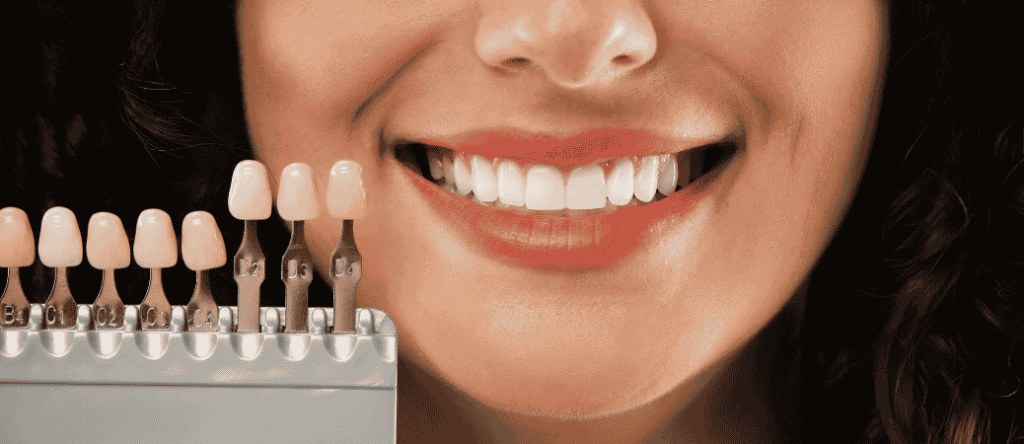
If you are asking, “how many veneers do I need,” the answer depends on which teeth show when you smile, what you want to change, and how your veneers will blend with untreated teeth.
There is no standard number. Some people need one or two veneers for individual teeth, while others consider more to cover the teeth visible when they smile.
A dentist can recommend a count after assessing your smile, bite, and goals.
If you have one chipped tooth, you may only need one veneer. If your whole smile feels dull or uneven when you laugh in photos, you might be looking at 8 or more.
Both can look completely natural when a dentist matches shape, shade, and proportion to the rest of your face.
Choosing the number carefully matters because veneer preparation may change your natural teeth, and veneers can need replacement over time.
Key Takeaways
- The right number of veneers depends on how many teeth show when you smile and speak, not a standard package size.
- Common counts range from a single veneer for one tooth up to 8 or 10 for a full upper smile makeover, with 12 or more reserved for wider smiles.
- Whitening, bonding, or orthodontics can sometimes reduce how many veneers you actually need.
What Does Each Veneer Count Typically Cover?
Veneer counts usually follow the shape of your smile rather than a fixed formula.
A single veneer fixes one problem tooth, four to six veneers cover your most visible front teeth, and eight to ten or more extend coverage to teeth that show when you have a wider smile.
Dentists tend to work in even numbers so both sides of your smile stay in sync. Two veneers on one side without a match on the other can look lopsided once you factor in how your lips move when you talk.
Thinking about veneer coverage in terms of your own smile zone, instead of a generic tier, helps set expectations before you ever sit in the chair.
When Is One or Two Veneers Enough?
A single veneer works well when just one tooth is chipped, discolored, or a slightly different shape than its neighbors.
Two veneers often come into play when both front teeth need attention, since matching them to each other (not just to the teeth beside them) keeps things looking even.
The tricky part with small numbers is blending. A single veneer needs a shade and shape that disappears next to your natural teeth, which is why color matching gets extra attention in these smaller cases.
When Do Four or Six Veneers Make Sense?
Four to six veneers typically cover your central incisors, lateral incisors, and sometimes your canines, the teeth that do most of the work when you smile for a photo.
This range is common for patients who want a noticeable improvement without changing their entire smile.
Six veneers often create better balance than four because canines frame the smile and add width. Leaving them untreated next to four brighter veneers can create a visible line where old teeth meet new ones.
Why Might a Wider Smile Need Eight to Ten Veneers?
Eight to ten veneers usually extend treatment into the premolars, the teeth that show when you have a broad, wide smile.
If you naturally reveal more teeth when you laugh, stopping at six can leave a noticeable gap in color or shape near the corners of your mouth.
This wider plan may help when premolars show during a full smile, but the number depends on where the veneers would meet untreated teeth.
When Are 12 or More Veneers Considered?
A plan involving 12 or more veneers may be considered when many upper teeth show or when visible lower teeth also need treatment.
Your dentist should assess each tooth and your bite before recommending such a broad plan.
How Do Dentists Decide Which Teeth to Treat?
Dentists count how many teeth appear in your visible smile zone, check your tooth color and proportions, and look at your bite before settling on a number.
None of these steps happen in isolation. A wide smile with a lot of visible teeth calls for a different plan than a narrow one, even if the underlying dental problems look similar.
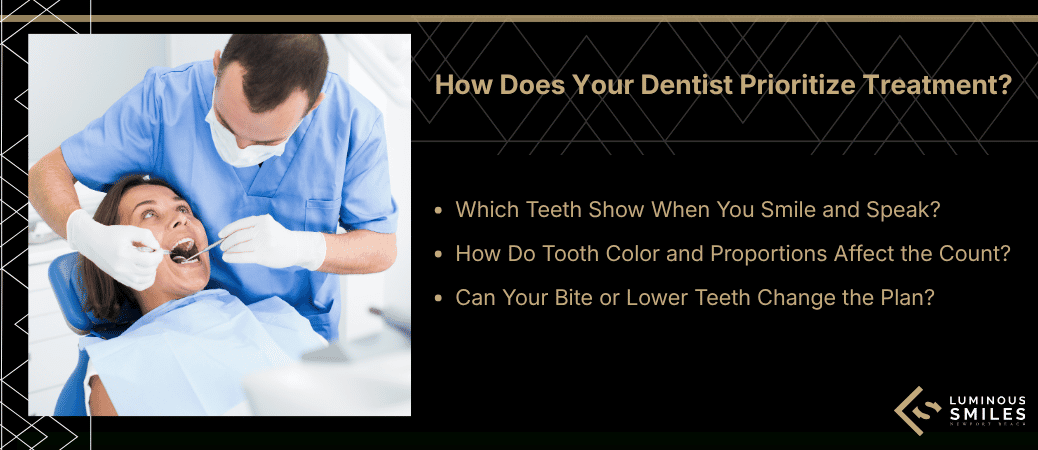
Which Teeth Show When You Smile and Speak?
Your smile width and smile line determine how far treatment needs to extend.
Some people show only their front four teeth when they smile naturally, while others reveal eight or more, including premolars, depending on lip movement and facial structure.
Dentists often photograph or video your natural, full smile rather than relying on a quick look in the exam chair.
This helps them spot the exact point where a veneer and an untreated tooth would meet, so that boundary doesn’t fall somewhere obvious.
How Do Tooth Color and Proportions Affect the Count?
The whiter shade you want, the more teeth usually need to match it.
Subtle changes can blend in next to your natural teeth, but a dramatic, bright white shade next to untreated teeth tends to look artificial at the transition point.
Tooth proportions matter too. If several teeth have uneven length, minor rotation, or wear, treating just one or two in isolation may not create the balanced look you’re after.
A well-planned smile design accounts for facial proportions as well, not just the teeth themselves, so the final result looks right for your face.
Can Your Bite or Lower Teeth Change the Plan?
Your bite alignment can shift the plan entirely. Worn teeth or a bite that puts uneven pressure on your front teeth sometimes need attention before veneers go on, so the new restorations hold up over time.
Missing teeth or significant misalignment may call for other treatment first.
Most veneer plans focus on the upper teeth, since lower teeth show less during normal talking and smiling, but broader lip movement, older age (which often means more lower tooth show), or a lower arch with visible staining can bring bottom teeth into the conversation.
Can You Get the Look You Want with Fewer Veneers?
Teeth whitening, dental bonding, and orthodontic treatment can each reduce how many veneers you actually need.
None of these options replace veneers outright, but combining them with a smaller veneer count often gets you a similar-looking result for less overall treatment.
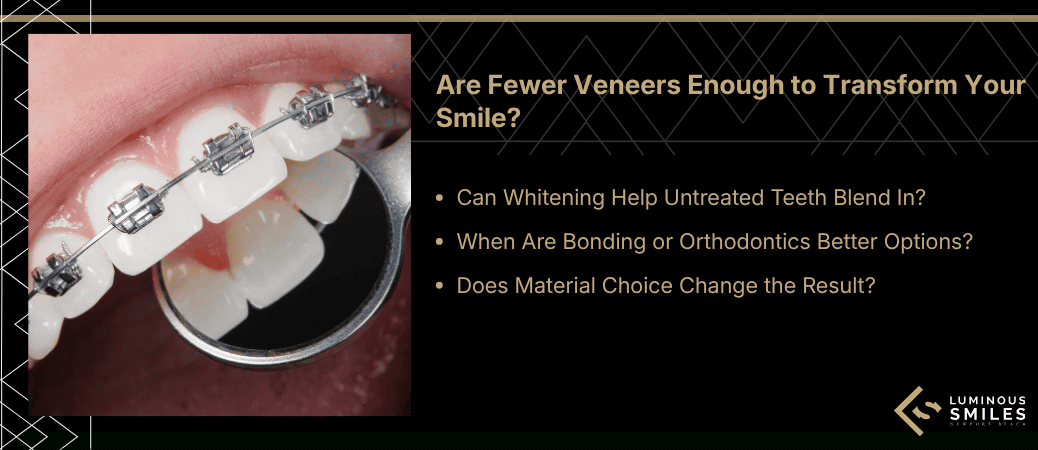
Can Whitening Help Untreated Teeth Blend In?
Whitening the teeth you’re not veneering can help them match teeth that are.
This works especially well when only your front four to six teeth need veneers and the rest of your smile just needs to be a shade or two brighter to blend in seamlessly.
The order matters: teeth whitening happens first, then the veneer shade gets matched to your newly whitened teeth.
Since veneers hold their color for years, matching them to teeth that have already brightened keeps the whole smile looking consistent later on.
When Are Bonding or Orthodontics Better Options?
Dental bonding may be an option for small chips or minor edge repairs on one or two teeth. The preparation needed and how long the result lasts depend on the tooth and the treatment plan.
Orthodontic treatment comes into play when teeth are noticeably crowded or misaligned.
Straightening teeth first, then veneering only what still needs cosmetic correction, usually gets a more stable, longer-lasting result than veneers alone over crooked teeth.
Does Material Choice Change the Result?
Porcelain and composite veneers differ in appearance, stain resistance, and maintenance needs. Material choice can affect how a veneer blends with untreated teeth, but it does not determine the number on its own.
Your dentist can assess your desired shade, the teeth visible when you smile, and the condition of your natural teeth before recommending a material and coverage plan.
What Should You Check Before Committing to a Number?
A veneer consultation should include a full smile assessment, a look at your bite, and some kind of visual preview before you agree to any number of teeth.
Skipping this step is how people end up with more (or fewer) veneers than they actually needed.
How Can a Smile Preview Confirm the Coverage?
Smile planning can help you review the proposed shape and coverage before treatment. Ask your dentist what preview is available and whether it can help you compare different coverage plans.
Also, during your personal smile consultation, ask how you will preview the proposed result and decide which teeth to include.
What Should You Ask About the Proposed Veneer Count?
Ask which teeth would receive veneers and why each one is included.
Your dentist can explain where the veneers would meet natural teeth and whether whitening, bonding, or alignment could help address some concerns instead.
Review the proposed plan and preview before deciding whether the number fits your goals.
Choose the Smallest Plan That Complements Your Smile

The best veneer count is the smallest one that gets your smile looking balanced, rather than a preset number.
A single veneer, six veneers, or a wider case of ten can all look completely natural when the plan matches what your own smile actually shows.
Before committing to any number, get a real assessment of your smile zone, tooth color, and bite. A natural-looking smile comes from careful planning, not from covering as many teeth as possible.
Working with a team like Luminous Smiles on a personalized plan is a reasonable way to make sure your smile makeover fits your face instead of a generic template.
Frequently Asked Questions
How many veneers do most people get for a natural-looking smile?
There is no standard number. Some people consider one or two veneers for individual teeth, while others may need more to cover the teeth visible when they smile.
The right count depends on your smile width, tooth color, bite, and goals.
Can I get veneers on just my two front teeth?
Yes, two veneers on your front teeth is a common and reasonable option if that’s where your main concern is.
Your dentist will check that the shade and shape blend with your other teeth so there’s no visible line where the veneers end.
Do I need veneers on both my top and bottom teeth?
Most patients only need veneers on their top teeth, since the upper arch shows the most during normal talking and smiling.
Bottom veneers usually only come up if your lower teeth show a lot, are noticeably stained or worn, or your bite needs both arches addressed together.
What is the 4-8-10 rule for veneers?
The 4-8-10 rule is a planning shorthand some dentists use to describe common veneer counts: 4 for narrow smiles, 8 for average smiles, and 10 for wider smiles that show more teeth.
It’s a helpful starting point for conversation, not a clinical requirement, since your own smile line and tooth proportions can push that number higher or lower.
Which looks more natural, porcelain or composite veneers?
Porcelain veneers generally look more natural over time because the material reflects light similarly to real enamel and resists staining better.
Composite veneers can also look natural right after placement, but they’re more prone to picking up stains and may need refreshing sooner.
Could whitening or bonding reduce the number of veneers I need?
Possibly. Whitening may help untreated teeth blend with veneers, while bonding may address small chips or shape differences on individual teeth.
A dentist can assess whether either option fits your smile and bite.