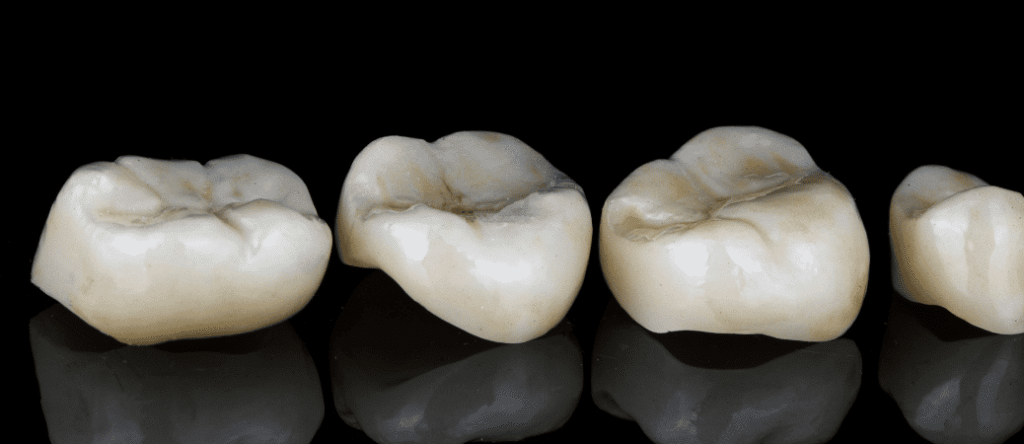
If your crown keeps breaking, the repeated damage may point to excess bite pressure, grinding, a problem with the crown, or a weakened tooth underneath.
The most common culprits are a bite that hits the crown too hard, nighttime grinding or clenching, a crown that is too thin or poorly fitted, and a weak tooth underneath.
A repeat failure is frustrating, and it is also useful information. When the same tooth fails twice, a replacement made the same way will likely meet the same fate. The fix starts with finding out why it broke.
A broken dental crown can mean a chipped edge, a crack through the crown, or a crown that pops off with or without part of your tooth.
Each of those points to a different problem, and each calls for a different check in the dental chair.
Key Takeaways
- Repeat crown breaks almost always trace back to force, fit, or a weak tooth underneath.
- How the crown failed gives your dentist strong clues about the cause.
- A new crown lasts longer when the bite, grinding habits, and tooth support are addressed first.
Table of Content
- What Causes a Crown to Break Repeatedly?
- What Does the Way It Failed Tell You?
- What Should You Do When a Crown Breaks?
- How Can a Dentist Stop the Breakage Cycle?
- How Can You Help a Replacement Crown Last?
- Find the Cause Before Replacing the Crown Again
- Frequently Asked Questions
What Causes a Crown to Break Repeatedly?
Crowns break over and over when the same stress keeps landing on them, whether from your bite, from grinding, or from a crown and tooth that are too weak for the job.
Hard and sticky foods add to the damage, and often two or more of these factors work together on one tooth.
Is Bite Pressure Concentrated on the Crown?
Your teeth touch during chewing, swallowing, and side-to-side jaw movement. Ideally, that bite pressure spreads across many teeth.
If your crown is the first tooth to touch when you close, or it catches during a sideways slide, it absorbs a load meant for several teeth.
You might notice the crown feels “high” or that one spot hits first. Even a small high spot, repeated thousands of times a day, wears on porcelain. Tell your dentist if a new crown ever feels off when you bite.
Could Teeth Grinding or Clenching Be Overloading It?
Teeth grinding (bruxism) and clenching put far more force on teeth than normal chewing. Most of it happens during sleep, so many people have no idea they do it.
Watch for these signs:
- Sore or tired jaw muscles in the morning
- Morning headaches
- Flat, worn spots on your other teeth
- A partner who hears grinding at night
If your jaw aches often, jaw pain can point to grinding or bite problems that are worth checking.
Are the Crown or the Tooth Underneath Too Weak?
Crown materials handle force differently. Zirconia resist fracture well, while layered porcelain looks lovely but chips more easily under heavy loads.
Your dentist can explain which crown material is right for you based on where the tooth sits and how hard you bite.
Thickness counts too. If there is little space between your teeth, the crown may end up too thin to hold up.
And insufficient tooth structure under the crown, from old fillings, decay, or past fractures, leaves the crown with a shaky base.
Chewing ice, hard candy, or sticky caramel adds sudden stress that can finish off an already strained crown.
What Does the Way It Failed Tell You?
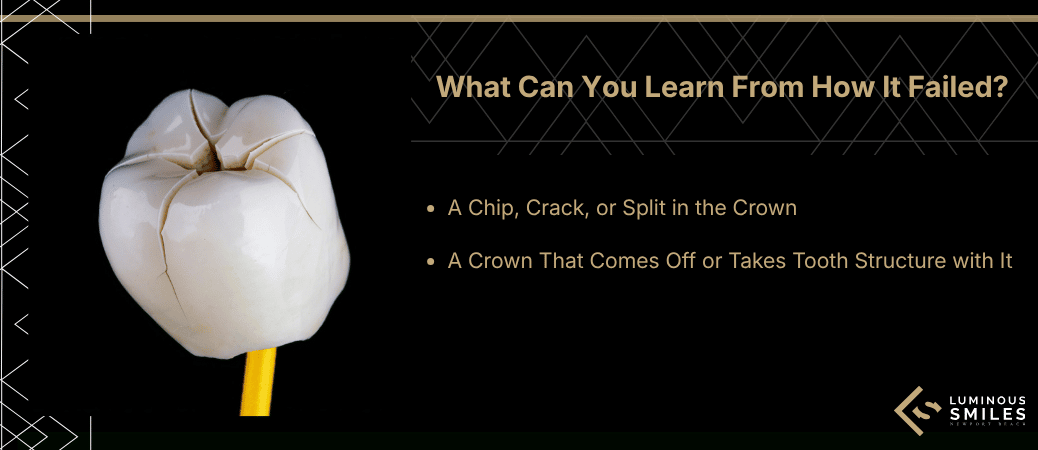
The type of crown damage you see points your dentist toward the cause. A crown that cracks tells a different story than one that falls off in one piece, and at Luminous Smiles we ask to see the broken piece whenever you have it.
| What you notice | Likely contributors | What your dentist checks |
| Small chips | Heavy contact, grinding, thin porcelain | Bite marks, material thickness, opposing tooth |
| Crack or split crown | High force, too little space | Clearance, crown design, clenching history |
| Crown comes off intact | Short tooth, decay, cement failure | Fit, retention, tooth health |
| Crown takes tooth with it | Cracked or weak tooth | X-rays, fracture depth, gum line |
A Chip, Crack, or Split in the Crown
When the crown itself breaks, the problem is usually force. Your dentist will look at how your teeth meet, check for wear on nearby teeth, and measure how much room the crown had.
Swapping to a stronger material without fixing the bite can move the stress elsewhere, such as to the opposing tooth or the root.
A Crown That Comes Off or Takes Tooth Structure with It
A crown that pops off whole points to a retention problem. Part of why dental crowns fall off is that the tooth underneath is too short or tapered to grip the crown, or decay has softened the edges.
Simply re-cementing it will not help if the tooth has changed shape.
If a chunk of tooth comes out inside the crown, the tooth itself fractured. Teeth that had a root canal often lost a lot of structure earlier, though the root canal alone does not doom a crown.
Your dentist will take X-rays to see how deep the break goes.
What Should You Do When a Crown Breaks?
Protect the area, save every piece, and call your dentist soon, even if nothing hurts. Home care buys you time; it does not replace an exam.
Protect the Tooth and Save Any Broken Pieces
Take these steps right away:
- Remove loose pieces from your mouth so you do not swallow them.
- Put the crown or fragments in a clean container.
- Rinse gently with warm salt water.
- Chew on the other side and skip hard or sticky foods.
- Cover sharp edges with dental wax to protect your tongue and cheek.
Temporary dental cement from a drugstore can hold an intact crown in place for a short time. Never use superglue or household glue.
If your dentist fits a temporary crown while a new one is made, treat it gently, since it is not as strong.
Know When to Seek Prompt or Urgent Dental Care
Call right away for severe pain, swelling, fever, pus, a bad taste that lingers, or facial injury. Those signs point to infection or trauma. Our guide on what to do in a dental emergency walks through the next steps.
Without those signs, still book a visit within a few days. Not to go more than a few days without a crown, since the exposed tooth can crack, shift, or decay.
Grinding may be putting your crown under stress. Reach out to discuss ways to protect it.
How Can a Dentist Stop the Breakage Cycle?
A dentist breaks the cycle by finding the cause first and designing the next restoration around it.
A good crown consultation covers your full history: how old each crown was, where it broke, and what you were doing at the time.
Check the Bite, Crown Fit, and Remaining Tooth
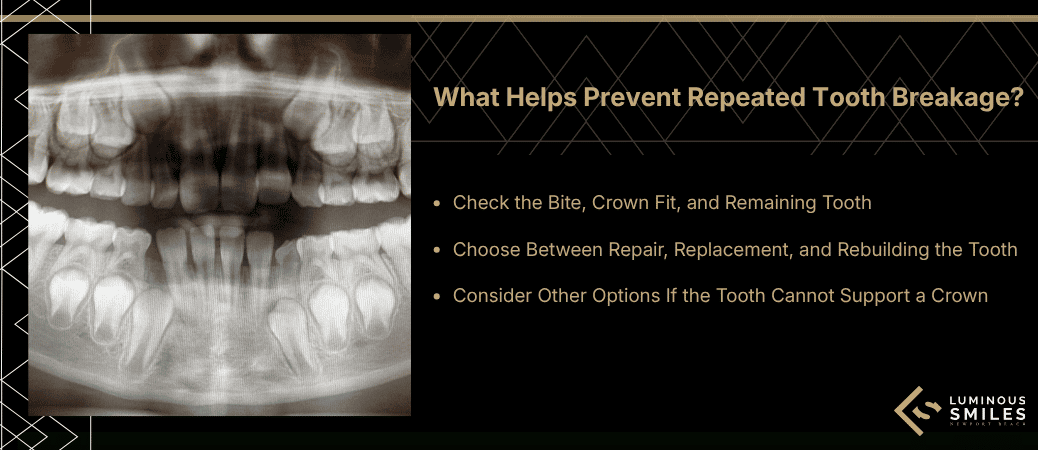
Expect your dentist to mark your bite while you close and slide your jaw, then look for heavy contacts. X-rays show decay and cracks under the old crown.
Digital scans, part of the technology many offices use, help check crown shape and fit in detail.
Choose Between Repair, Replacement, and Rebuilding the Tooth
Small chips can often be smoothed or bonded with tooth-colored resin. Larger cracks, loose fit, or decay underneath mean a new crown. If the tooth is short, a core buildup adds height for grip.
In some cases, crown lengthening surgery exposes more healthy tooth so the new crown has something solid to hold. Your dentist can explain the steps and timing for a replacement crown after evaluating the cause.
Consider Other Options If the Tooth Cannot Support a Crown
If the tooth cannot be saved, your dentist can discuss replacement options after assessing the tooth, surrounding bone, and bite. An implant-supported crown may be one option, depending on your needs.
Your dentist can talk through why replacing a missing tooth matters for your bite and nearby teeth.
How Can You Help a Replacement Crown Last?
Your new crown lasts longest when you control grinding, avoid habits that stress it, and let your dentist catch small problems early.
Address Grinding and Protect the Crown at Night
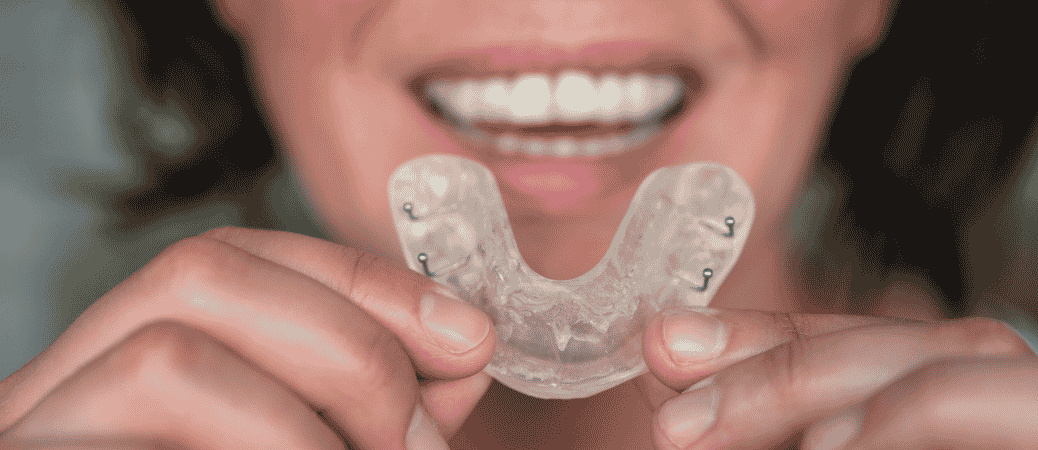
If you grind your teeth, a custom night guard is one of the best protections for a new crown. It spreads force across your teeth and cushions them while you sleep. Store-bought guards fit loosely and can shift.
Bring your guard to checkups so your dentist can read the wear marks and adjust it as your bite changes. Untreated bruxism also leads to the dangers of worn teeth across your whole mouth.
Limit Damaging Habits and Keep Up with Dental Checkups
Small daily choices protect your crown:
- Skip chewing ice, pens, and hard candy
- Use scissors to open packages
- Floss around the crown edge every day
- Call your dentist if the crown ever feels high
Checkups every six months let your dentist spot cavities and tooth decay at the crown edge before it weakens the tooth underneath.
Find the Cause Before Replacing the Crown Again
A crown that breaks more than once is sending a signal about force, fit, or the tooth underneath. Save the pieces, protect the tooth, and see your dentist within a few days.
Ask what failed, whether your bite shows a heavy spot, and how the next crown will differ.
With a clear cause and a plan built around it, whether that means a bite adjustment, a new material, a night guard, or restorative dentistry beyond a crown, your next restoration has a far better chance of lasting.
Frequently Asked Questions
What if my crown broke off at the gum line?
See your dentist within a day or two. A break at the gum line often means the tooth underneath is fractured, and X-rays will show whether enough healthy teeth remain to rebuild.
Options range from a post and buildup to crown lengthening or, in some cases, an implant.
Can I leave a chipped crown alone if it doesn’t hurt?
Have it checked even if it feels fine. A small chip can trap plaque, catch your tongue, or spread into a larger crack. Many minor chips are easy to smooth or bond when caught early.
Can a broken crown on a root canal tooth be repaired?
Often, yes, as long as enough sound teeth remain. Your dentist may place a post and core buildup, then make a new crown. If the root is cracked, extraction and an implant may be the better choice.
How long can I wait to see a dentist about a broken crown?
Aim for a visit within a few days. Pain, swelling, or fever means you should call the same day. Waiting longer lets the exposed tooth shift, decay, or crack further.
How much does it cost to fix a chipped crown?
The cost depends on whether the chip can be repaired or the crown needs to be replaced.
Your dentist will examine the crown and the tooth beneath it, explain the recommended treatment, and provide an estimate before you decide how to proceed.