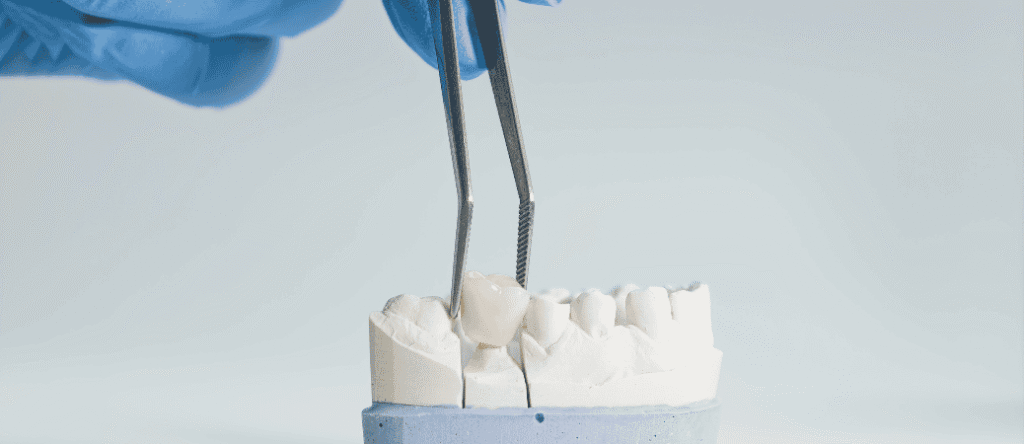
You notice it every time you catch your reflection: one front tooth looks a shade off from the rest of your smile. Maybe it’s been that way for a while, or maybe it started right after a whitening treatment.
Either way, it’s distracting, and you want to know what you can actually do about it.
If you are concerned about a dental crown color mismatch in Newport Beach, the right solution depends on what caused the difference.
Professional cleaning may help when surface stains are responsible.
Whitening may help when the surrounding natural teeth have darkened, while replacing the crown may be appropriate when its underlying shade no longer matches.
Custom dental crowns can restore both tooth function and a natural appearance. A dental exam helps determine which approach fits your smile.
Key Takeaways
- Professional cleaning may improve surface staining, while whitening may help when the surrounding natural teeth are darker than the crown.
- Whitening does not lighten a crown’s underlying shade. A persistent difference may require crown replacement.
- A dentist assesses shade, shape, translucency, and fit before recommending treatment and checks a replacement crown before final placement.
Does your crown stand out from your smile? Visit Luminous Smiles in Newport Beach for an assessment.
What Can You Do About a Mismatched Front Crown?
Your first move is a dental exam, not a trip to the whitening aisle. A dentist needs to look at your dental crown and the teeth around it to figure out whether the mismatch comes from surface stain, a genuine shade difference, or something happening underneath the crown.
From there, the fix ranges from a simple cleaning to full crown replacement.
Start with a Dental Exam Before Changing the Color
Don’t try to whiten your way out of a mismatch without a checkup first. Whitening products work on natural enamel, not on porcelain or ceramic crowns, so using them without knowing the actual cause can waste time and money.
A dental exam and appropriate X-rays help your dentist assess the crown, surrounding teeth, and underlying tooth structure to identify what may be causing the mismatch.
Can Cleaning or Polishing Restore the Match?
Sometimes, yes. A crown’s glazed surface starts out smooth, but repeated contact with acidic drinks, coffee, or abrasive toothpaste can roughen that surface over time, making it grab stains the way natural enamel does.
A professional cleaning and polish can remove that surface buildup and bring back a closer match.
This fix tends to be temporary unless you also tighten up your oral hygiene habits at home, since the same staining pattern can return.
When Is Crown Replacement the Better Option?
Crown replacement becomes the better option when the mismatch is built into the material itself, not just sitting on the surface.
If tinted glazes have worn off a crown’s surface, or the color gap is simply too wide for whitening or polishing to close, a new crown is often the only way to get a lasting match.
It’s also worth considering replacement if the crown is older and showing other wear, since you may be able to solve two problems in one appointment.
Why Did Your Crown Stop Matching?
Your crown likely matched well on the day it was placed. The mismatch you’re seeing now usually comes from one of four sources: your other teeth changed color, surface stains built up, the materials behave differently under certain light, or something shifted near the gumline.
Changes in the Color of Nearby Teeth
Natural teeth darken gradually from everyday exposure to coffee, tea, wine, and other staining foods, while the porcelain surface of a crown resists that kind of staining.
Over months or years, this creates a gap where your crown starts to look too bright compared to teeth that have quietly darkened around it.
This is one of the most common reasons a crown that matched perfectly at placement no longer does.
Surface Stains, Crown Materials, and Lighting
Crown materials and natural tooth enamel handle light differently, which is part of why an exact match is hard to achieve even under ideal conditions.
Porcelain thickness, the angle you view your teeth from, and the room’s lighting can all change how close a match looks on a given day.
A crown that looks fine under your bathroom light might look slightly off in bright Newport Beach sunlight, which is normal and not necessarily a sign anything is wrong.
Changes at the Gumline or Beneath the Crown
A darkening line at the gumline, or changes in gum tissue around the crown, can also affect how the restoration looks overall even if the crown’s color hasn’t changed at all.
This is a separate issue from shade mismatch and has its own underlying causes tied to gum health or the material used at the crown’s base.
Keeping up with routine oral hygiene and dental visits helps your dentist catch these changes early, before they become more noticeable.
Has your crown stopped blending with nearby teeth? Schedule an assessment to find out what may help.
How Can a Replacement Crown Match Your Smile?
A well-matched replacement crown comes from timing, material choice, and a trial step, not from picking a single shade off a chart.
A cosmetic dentist builds the match in stages, starting with your natural teeth and ending with a careful check before the crown is permanently placed.
Whiten Natural Teeth Before Choosing a Crown Shade
If you are considering professional cleaning and whitening, discuss your plans before choosing a replacement crown’s shade.
Whitening changes natural tooth color but does not lighten an existing crown. Your dentist can advise when your tooth shade has stabilized enough for accurate matching.
Match Shape, Translucency, and Color
Color is only one part of a convincing match; shape and translucency matter just as much.
Natural teeth have subtle variation in how light passes through them near the edges versus the body of the tooth, and a flat, opaque crown will stand out even if the color itself is close.
Understanding how crown materials affect appearance can help you discuss translucency, strength, and shade with your dentist when planning a replacement.
Check the Fit and Appearance Before Final Cementation
Before any crown is permanently cemented, it should be checked for fit and appearance together, ideally with a temporary placement you can evaluate in different lighting.
This trial step lets you and your dentist catch a mismatch before it’s permanent, rather than discovering it weeks later.
Fit problems, like a crown that feels high when you bite down, are a separate concern from color and should be addressed on their own terms during this same check.
What Should You Expect from Treatment in Newport Beach?
Expect a process that takes more than one visit and involves some back-and-forth on shade and fit. Costs vary depending on the cause of your mismatch and whether a new crown is needed at all.

Appointments, Costs, and Questions to Ask
A simple cleaning or polish can often be done in a single visit.
Crown replacement typically takes two appointments spaced about one to two weeks apart, with a temporary crown worn in between, and front tooth crown costs generally range from $800 to $3,000 or more per tooth depending on material and lab work involved.
Ask your dentist whether your case calls for a standard crown or a referral to a specialist, what material they recommend for your front tooth, and whether a trial placement is part of the plan.
Caring for Your Crown and Surrounding Teeth
Good oral hygiene keeps both your crown and your natural teeth looking consistent over time.
Brush twice daily with fluoride toothpaste, floss around the crown’s edges, and avoid biting down on hard objects like ice or pens that can chip porcelain.
Following tips for maintaining healthy gums and attending routine dental visits helps support the tissues around your crown and identify changes early.
Choosing the Right Fix for Your Smile

The right fix depends on what’s actually causing the mismatch, and that’s worth confirming with an exam rather than guessing.
A cleaning handles surface stains, whitening handles natural teeth that have darkened, and crown replacement handles mismatches built into the crown material itself.
If you’re also weighing bigger smile changes, it helps to look at the full range of options.
Comparing choosing the right tooth restoration for you against crown replacement alone can clarify whether a broader approach, like exploring dental veneers for your smile, might serve your goals better than a single new crown.
A thoughtful cosmetic dentist at Luminous Smiles can walk through these trade-offs with you based on your specific smile, not a one-size-fits-all recommendation.
Frequently Asked Questions
Can a dental crown be whitened?
No. Crown materials like porcelain and ceramic don’t respond to whitening gel the way natural enamel does, so bleaching treatments won’t lighten a crown’s underlying color.
If a crown looks too dark, polishing may remove surface stain, but a true color change usually requires a new crown.
What can I do if my front crown doesn’t match my other teeth?
Start with a dental exam to find out whether the mismatch comes from surface stain, changes in your natural teeth, or the crown material itself.
Depending on the cause, a cleaning, a whitening treatment on your natural teeth, or a crown replacement may solve it.
How much does it usually cost to replace a front crown?
Front tooth crown costs generally run from $800 to $3,000 or more per tooth, depending on the material and lab work involved.
Your exact cost depends on your specific case and whether insurance covers part of the procedure.
How many times can a dental crown be replaced?
There’s no fixed limit on how many times a crown can be replaced, as long as there’s enough healthy tooth structure left to support a new one.
Each replacement involves removing the old crown and reshaping the tooth, so your dentist will evaluate whether your tooth can handle another round.
Is my dentist responsible if a new crown doesn’t match?
Many dental offices will work with you to adjust or remake a crown that doesn’t match well, especially if the issue is caught soon after placement.
A trial fitting before final cementation is the best way to avoid this situation altogether, since it gives you a chance to flag concerns before the crown is permanent.