
Composite bonding stains can be frustrating when a tooth that once blended in starts looking dull. Coffee, tea, and everyday wear may change the resin’s appearance over time.
If your bonding looked bright white the day you left the dental chair and now looks a shade or two duller, you’re seeing something completely normal happen to a material that behaves differently from your natural teeth.
Composite bonding stains because the resin used to shape and brighten your teeth is slightly porous, unlike tooth enamel.
Pigments from coffee, tea, red wine, and other everyday foods settle into that surface over months and years.
The good news is that professional polishing can often bring back much of that shine, though it depends on whether the stain sits on the surface or has worked its way deeper into the material.
Key Takeaways
- Composite resin is more porous than natural enamel, so it picks up stains from coffee, tea, and wine more easily.
- Professional polishing removes surface stains well but cannot change the resin’s actual color or fix deep discoloration.
- Whitening toothpaste and whitening kits will not lighten bonding, so edge staining, roughness, or sensitivity should prompt a dental visit rather than more scrubbing at home.
Why Does Composite Bonding Stain?
Composite bonding stains because the resin material soaks up pigment from what you eat and drink, in a way natural enamel resists much better.
The staining itself is not a sign that anything went wrong with your treatment. It is simply how this material behaves over time.
How Does Composite Resin Pick Up Color?
Composite resin is made from a mix of glass filler particles and a plastic-based matrix, and that matrix is more porous than tooth enamel.
When your bonding was freshly placed and polished, its surface was smooth and tightly sealed.
Over months of normal use, tiny surface scratches build up from brushing, chewing, and everyday wear, creating microscopic spaces where pigment can settle in and stick around.
Which Foods, Drinks, and Habits Cause Staining?
Coffee and tea are two of the most common culprits, alongside red wine, dark sauces, and berries. Smoking is another major factor, since tobacco stains composite noticeably faster than it stains natural teeth.
Acidic drinks like soda and fruit juice don’t stain directly, but they soften the resin surface just enough to make future staining worse, and alcohol-based mouthwash used often may do something similar.
Why Do Stains Sometimes Appear at the Edges?
The margin where composite bonding meets your natural tooth is often the first place discoloration shows up.
This edge experiences more exposure to food particles, saliva, and bacteria, and the seal between resin and enamel is naturally the weakest point in the whole restoration.
Edge staining does not automatically mean something has failed, but it is worth mentioning at your next check-up, especially if you can feel a rough spot or small gap with your tongue.
Can Professional Polishing Restore the Bonding?
Composite bonding can often regain its smooth, bright finish with professional polishing, especially when the staining is on the surface.
A dentist or hygienist uses tools and pastes made specifically for composite resin, which is gentler and more effective than a standard cleaning alone.
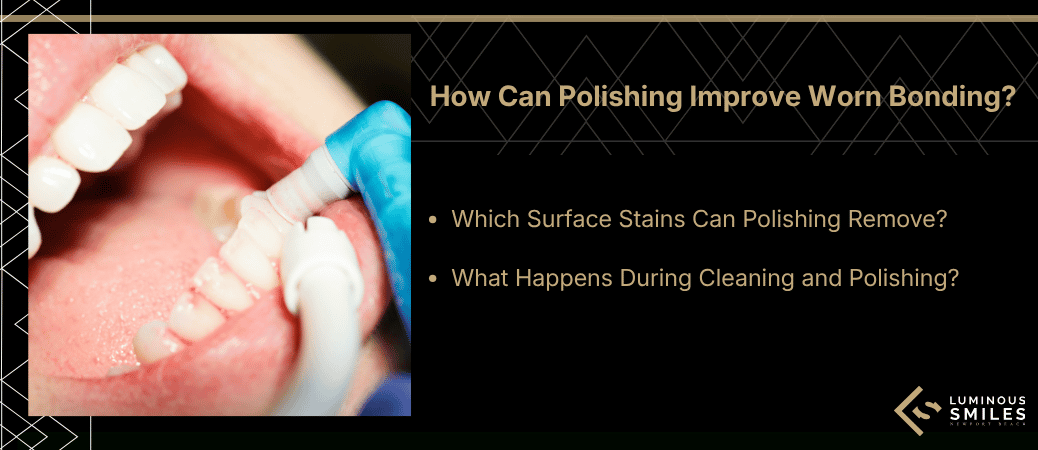
Which Surface Stains Can Polishing Remove?
Surface stains from coffee, tea, red wine, and tobacco respond well to polishing in most cases.
These pigments sit in the outer layer of the resin, so removing a very thin layer during polishing brings a fresh, smooth surface back into view.
Polishing also smooths out the tiny scratches that make staining worse over time, which helps slow down how quickly new stains take hold.
What Happens During Cleaning and Polishing?
During professional dental cleaning, your dentist will use polishing discs, cups, and composite-safe pastes in stages, moving from a mild abrasive to a finer polish.
This is different from a regular hygiene cleaning, which uses pastes designed for natural enamel and can actually scratch composite if used carelessly.
It’s worth telling your hygienist you have bonding before any dental hygiene appointment begins, so they use the right materials on those teeth.
Whether polishing can be done during a routine visit depends on the condition and location of the bonding. Your dentist or hygienist can recommend it when it needs attention.
When Is Polishing Not Enough?
Polishing works well on surface stains, but it cannot change the actual color of the composite resin underneath.
If discoloration has worked its way deep into the material, or if the bonding has physical damage, a professional dental assessment is the next step rather than another round of polishing.
Can Deep Discoloration or Damaged Edges Be Repaired?
Deep or intrinsic staining that has settled within the resin itself, rather than sitting on top of it, usually will not lift with polishing alone.
The same is true for chipped edges, rough margins, or bonding that has started to separate slightly from the tooth.
In these cases, your dentist may recommend refinishing the affected area or replacing that section of bonding, which is a more predictable fix than repeated polishing attempts.
Why Won’t Whitening Products Lighten Composite Resin?
If you are considering whitening your natural teeth, discuss the timing with your dentist so the bonding does not stand out afterward.
Whitening toothpaste may remove some surface stains, but abrasive products could dull or scratch the resin.
If you whiten your natural teeth, your bonding will stay exactly the shade it already was, which sometimes makes it stand out more against newly brightened teeth around it.
If you’re weighing up your options here, this guide to teeth whitening explains how the process works on natural enamel.
When Should You Book a Dental Assessment?
Book a dental assessment if you notice sensitivity around bonded teeth, a rough or chipped edge, or staining that has darkened suddenly rather than gradually.
The same goes for any gap you can feel at the margin between the bonding and your natural tooth.
A dentist can tell the difference between a simple surface stain and something that needs repair, and they’ll also flag if porcelain veneers might suit you better going forward if staining keeps becoming a recurring frustration.
How Can You Keep Bonding Looking Brighter?
Good daily habits slow down staining more than any single treatment can. Small, consistent choices around brushing and diet make a real difference in how long your bonding keeps its shine between professional visits.
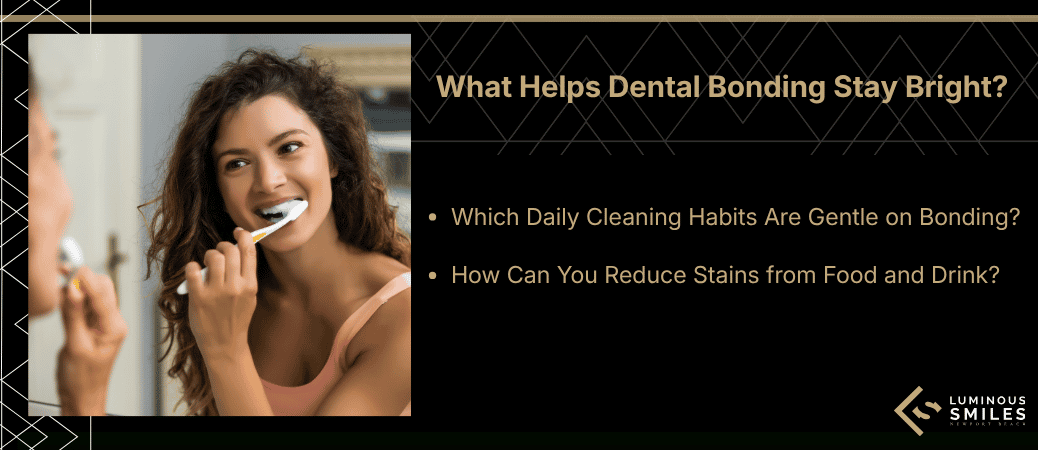
Which Daily Cleaning Habits Are Gentle on Bonding?
Brush twice a day with a soft-bristled brush and a non-abrasive fluoride toothpaste, since abrasive whitening pastes can scratch the resin and make future staining worse.
Floss daily around the bonding margins, where plaque tends to build up fastest.
A water flosser can help reach those edges without extra pressure on the composite surface, and it’s worth reviewing your oral hygiene routine as a whole if you’ve noticed staining creeping back quickly.
How Can You Reduce Stains from Food and Drink?
Rinse with water after coffee, tea, or red wine to stop pigment from sitting on the surface. Using a straw for some drinks may reduce contact with your front teeth, although it will not prevent staining entirely.
Cutting back on how often you have staining foods, rather than cutting them out completely, is often the more realistic composite bonding maintenance goal, and it genuinely helps prevent composite bonding from staining as quickly.
The Right Fix Depends on the Stain

Composite bonding staining sits on a spectrum, from light surface discoloration that a good polish clears up, to deeper color change or edge damage that needs a proper repair.
Knowing which one you’re dealing with is the difference between an easy fix and wasted effort on home remedies that won’t work.
If your bonding still feels smooth and the staining looks even, a hygiene visit with polishing is a reasonable first step.
If you notice roughness, sensitivity, or a stain that keeps returning right at the edge, that’s the moment to ask your dentist for a proper look.
At Luminous Smiles, patients are guided toward whichever option actually fits what’s happening with their bonding, rather than assuming polishing will solve every case.
Frequently Asked Questions
How can I reverse staining on composite bonding?
Surface staining often responds well to professional polishing, which removes a thin layer of the resin surface to reveal a fresh, smoother finish underneath.
Gentle brushing with a non-abrasive toothpaste helps in mild cases, but deeper discoloration usually needs a dentist’s assessment rather than a home fix.
Can composite bonding be polished more than once?
Yes, composite bonding can be polished again as part of routine dental visits, often once or twice a year.
Each polish removes a very small amount of surface material, so your dentist will check the bonding’s overall condition to make sure repeated polishing is still appropriate.
What should I do if my dental bonding has stained?
Start with better daily brushing using a soft brush and non-abrasive toothpaste, and book a dental hygiene appointment for a professional polish.
If the staining is at the edges, has appeared suddenly, or comes with any sensitivity, mention it to your dentist so they can check the bonding directly.
What ruins the polished finish on composite bonding?
Abrasive whitening toothpaste, hard-bristled brushes, and standard prophy polishing paste not meant for composite can all scratch the surface and dull the finish.
Biting hard objects, smoking, and frequent acidic drinks also wear down that smooth top layer faster than normal use would.
Will whitening my teeth make stained bonding match again?
No, whitening treatments only work on natural enamel and will not change the color of composite resin at all.
If you whiten your natural teeth while your bonding stays the same shade, the bonding can end up looking more noticeable rather than less, so it’s worth discussing timing with your dentist beforehand.