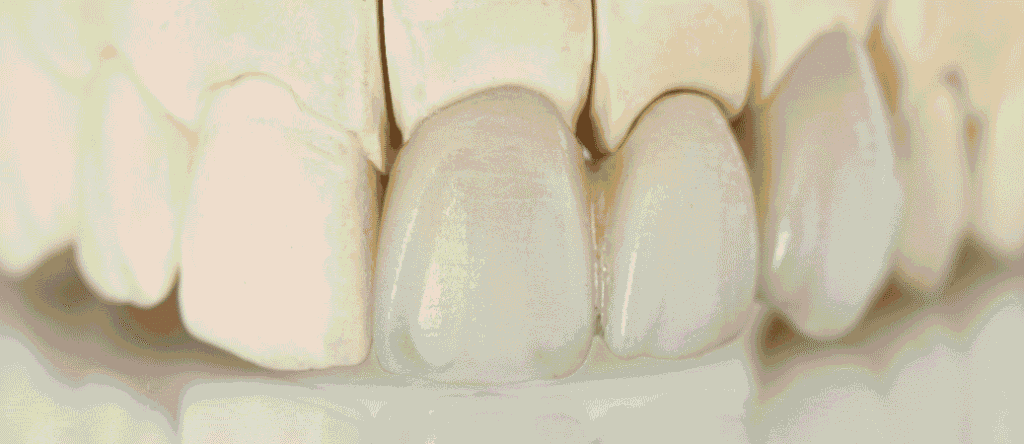
You caught a glimpse in the mirror, or maybe someone pointed a phone camera at your smile, and there it was: a thin dark line sitting right where your crown meets your gum.
It can feel alarming at first glance, like something is wrong under the surface.
If you notice a dark line around dental crown edges, an exposed metal margin is one possible explanation. Staining, gum recession, decay, or a darkened tooth can also affect the appearance.
A dental crown can restore a damaged tooth’s strength and appearance, but a new or changing dark line should be assessed to identify its cause.
At Luminous Smiles, patients bring this up often enough that it is worth walking through exactly what to look for before assuming the worst.
A dark line at the gumline deserves a closer look, not panic. Knowing the difference between a stable cosmetic line and one that signals a problem can save you both worry and unnecessary dental work.
Key Takeaways
- An exposed metal margin, staining, gum recession, or changes in the tooth underneath can cause a dark line near a crown.
- Bleeding, swelling, sensitivity, or a loose-feeling crown are signs the cause goes beyond appearance and needs a dental visit.
- A dental exam, sometimes with an X-ray, is the only reliable way to confirm whether the line is cosmetic or a sign of decay or gum disease.
Why Does the Crown Edge Look Dark?
The dark line you’re seeing usually comes down to one of three things: the crown’s own materials, changes in your gum tissue, or something happening to the tooth underneath.
Each one looks slightly different once you know what to check for, and each calls for a different response.
Is the Metal Edge of a PFM Crown Showing?
An exposed metal margin is one possible cause, particularly with a porcelain-fused-to-metal crown.
A porcelain-fused-to-metal (PFM) crown has a metal base covered with a layer of tooth-colored porcelain, and that metal extends all the way to the crown margin, the spot where the crown meets your natural tooth.
Some crown margins sit below the gumline. If the gums recede, a previously hidden margin may become visible.
Years later, as gum tissue shifts slightly with age, that edge can peek out. The result is a thin gray or dark line that reflects an aging restoration more than a damaged one.
Has Gum Recession Exposed the Crown Margin?
Gum recession can expose a crown margin or root surface that was previously hidden.
As gums recede, even by a millimeter or two, more of the crown margin and root surface becomes visible, which can make a dark crown margin stand out more sharply than before.
Recession has several possible drivers: natural aging, brushing too hard, gum disease, or teeth grinding.
It can also happen gradually around a crown that was fitted with its edge slightly below the gumline, since that placement puts mechanical pressure on the tissue over years.
Could Staining, Decay, or a Darkened Tooth Be Responsible?
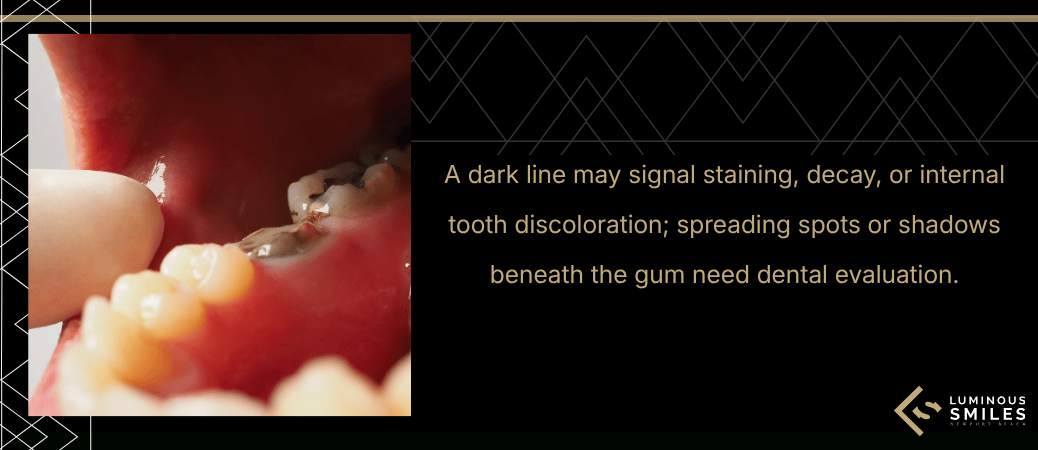
Sometimes the dark line isn’t about the crown margin at all.
It can come from staining at the edge of the restoration, decay forming where the crown meets the tooth, or a tooth that has darkened from the inside after the nerve died.
These causes tend to look different from a straight, even line. A shadow that looks like it’s coming from beneath the gum, or a spot that seems to be spreading, points toward one of these dental restorations needing closer evaluation rather than a cosmetic explanation.
When Is the Dark Line More Than Cosmetic?
A dark line that stays the same size and color year after year, with no pain or bleeding, is usually not urgent.
The story changes when other symptoms show up alongside it, since those can point to gum disease, tooth sensitivity, or an infection brewing under the crown.
Which Symptoms Suggest Gum Disease or Decay?
Watch for gum tissue that looks dark purple or swollen rather than just a thin gray line at the edge. Healthy gums vary naturally in color.
New swelling, tenderness, or bleeding when brushing deserves assessment, especially when it occurs around one crown.
Other warning signs include:
- New or worsening sensitivity to hot, cold, or sweet foods
- Pain when you bite down on the crowned tooth
- A bad taste or odor near the crown
- A visible gap or looseness where the crown meets the tooth
Gum disease is very treatable when caught early, and a color change at the gumline is sometimes the first clue before any discomfort sets in.
When Should You Book a Dental Examination?
Book an appointment if the line appeared suddenly, has grown darker, or shows up with any of the symptoms above.
A crown that has been in place for ten years or more is also worth a checkup even without symptoms, simply because materials and gum tissue both change over that span of time.
If the line has looked exactly the same for years and nothing else feels different, it’s reasonable to mention it at your next regular visit instead of scheduling something sooner.
A new dark line has appeared near your crown. Schedule an examination to identify the cause.
How Does a Dentist Find the Cause?
A dentist narrows down the cause with a hands-on exam of the crown, tooth, and gum tissue, often paired with imaging to see what’s happening below the surface.
This combination is what separates a cosmetic line from one that needs treatment.
Checking the Crown Fit, Tooth, and Gums
A dental examination helps your dentist assess the crown’s fit, check its margins, and examine the surrounding gums.
They’ll also look at gum color, firmness, and whether there’s any bleeding or swelling nearby, and may test the tooth for sensitivity to see if the nerve is reacting normally.
When Are Dental X-Rays Helpful?
Dental X-rays can help identify some decay, bone changes, or signs of infection around a crowned tooth.
They do not show every problem or establish pulp health on their own. Your dentist combines imaging with an examination, symptoms, and appropriate tooth tests.
How Can the Dark Line Be Fixed?
The fix depends entirely on what’s causing the line, and that’s why a diagnosis has to come before any treatment decision.
Some situations call for nothing more than watching and cleaning, while others need gum care, decay repair, or a new crown.
When Is Monitoring or Professional Cleaning Enough?
If the crown fits well, the gums are healthy, and the line has been stable for a while, your dentist may suggest simply checking it at your regular visits.
A professional cleaning can also help if mild staining around the margin is part of what’s making the line more noticeable.
When Do Gum Treatment or Decay Repair Come First?
If gum disease or decay is part of the picture, that needs to be addressed before anything else.
A deeper cleaning can calm inflamed gum tissue, and any decay found under the crown has to be removed and the tooth restored before a crown of any kind is placed back over it.
Should You Replace the Crown with a Metal-Free Option?
Crown replacement with a metal-free crown is a reasonable option if the metal margin on an old PFM crown bothers you cosmetically.
A zirconia crown, all-ceramic crown, or one made from lithium disilicate has no metal core, so there’s no dark band to show through as gums shift in the future.
It’s worth knowing what a metal-free crown can and can’t fix. It eliminates the metal line itself, but it won’t reverse separate staining within the gum tissue or change the color of a tooth that has already darkened underneath.
If you’re weighing your options, this guide on which crown material is right for you walks through how the materials compare.
How Can You Protect the Crown and Gumline?
Good daily habits around the crown margin slow down the gum changes that eventually expose it. The two biggest factors you control are how you clean the area and how often you let a dentist check it.
Clean Around the Margin Without Brushing Too Hard
Gentle, consistent oral hygiene protects gum tissue better than scrubbing ever will.
Aggressive brushing, especially with a hard-bristled brush, wears away gum tissue over time and speeds up the very recession that exposes a crown’s margin.
Angle your brush toward the gumline and use small, soft strokes instead of heavy pressure.
Daily flossing around the crown, curving the floss into a C-shape against the tooth, clears away the bacteria that cause both decay and gum irritation at the margin.
Keep Up with Checkups as Your Gums Change
Routine dental visits catch gum and crown changes early, often before you’d notice them yourself.
Since gum position shifts gradually with age, a crown that looked fine for a decade can start showing its margin without any sudden event triggering it, which is exactly why regular checkups matter more than waiting for a visible problem.
For more day-to-day habits that support the tissue around your teeth, see these top tips for maintaining healthy gums.
Find the Cause Before Choosing a Fix

A dark line at the gumline is common, and in many cases it turns out to be nothing more than an older crown showing its age.
The only way to know for certain is a dental exam, since the same line can also signal gum disease, decay, or a change in the tooth underneath.
Pay attention to how the line behaves over time. A stable line with no other symptoms can usually wait for your next routine visit, while bleeding, swelling, sensitivity, or a sudden change deserves a sooner appointment.
At Luminous Smiles, Dr. Dimple Desai can assess the crown and surrounding gums and explain whether monitoring, gum care, or crown replacement is appropriate.
Frequently Asked Questions
Can I get rid of a black line above my crown at home?
No home remedy removes a dark line caused by a metal margin, gum recession, or staining within the gum tissue.
Gentle brushing and flossing can support gum health and slow further changes, but the line itself needs a dentist’s evaluation and, if needed, professional treatment.
Why does a porcelain crown have a black line?
A porcelain crown with a black line usually has a metal substructure underneath, making it a porcelain-fused-to-metal crown rather than a solid ceramic one.
As gum tissue recedes slightly over the years, that hidden metal edge becomes visible at the margin.
Does a dark line mean my crown is failing?
Not necessarily. A stable line with healthy gums and no sensitivity is usually cosmetic, but a line that’s new, growing, or paired with pain, swelling, or looseness can point to a margin that’s no longer sealing properly and should be checked.
How is a gap between a crown and the gum fixed?
Treatment depends on what’s causing the gap. Gum disease is managed with a professional cleaning or deeper scaling, while a poorly fitting crown may need to be replaced so the new margin seals properly against the tooth.
Can a root canal tooth look dark under a crown?
Yes. A root canal-treated tooth or a tooth with damaged pulp can become darker. Your dentist will assess the crown and tooth to identify the cause and discuss whether any treatment is needed.